Search Results
215 results for “texture”

Why Is My Cat Not Eating and What Should I Do?
A cat that won't eat may have respiratory, digestive, or dental disease, a foreign body, or simply dislike the food — stale kibble, sudden changes, or boring shape. Long fasting risks fatal hepatic lipidosis, so fix the cause: clear the nose, vary the diet, and see a vet for illness.

What Different Parrot Biting Behaviors Mean
Parrot biting has many meanings—besides calling and eating, the beak defends, attacks, explores, and plays, so the meaning is complex. Our team details biting from various causes.
Why Is Your Cat Suddenly Peeing or Pooping Outside the Litter Box?
A cat that suddenly stops using the litter box is sending a signal, about a dirty or poorly placed box, new litter it dislikes, hormones, a health problem, or jealousy of a new pet. Rule out pain or illness first, since urinary issues need a vet.

Colorpoint Shorthair
The Colorpoint Shorthair was developed from the Siamese, with red or cream restricted to points (face, legs, ears, tail, and genitalia). Early crosses with domestic shorthairs, refined by concentrating Siamese genes with red, produced the final Colorpoint Shorthairs. Like many CFA breeds, it is a man-made breed. In the 1940s and 50s, breeders risked deciding the beautiful Siamese should come in more than traditional seal and the most common blue point.

British Shorthair
The British Shorthair is a compact, powerful, easygoing cat with a round face, dense short coat, and large round eyes. With a history tracing to Roman times, it became a recognized breed in 19th-century Britain and is beloved for its calm, friendly, adaptable nature—an ideal companion that gets along with everyone.

Chinchilla
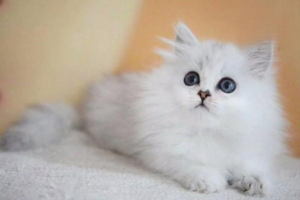
The Chinchilla, with the English name Chinchilla, originates from Britain and descends from the Angora and the Persian. Some call it the artificial cat, hinting it was deliberately bred by humans. Notably, the Chinchilla was the first fully human-bred cat, appearing in 1894.

Russian Blue
The Russian Blue, also called Russian Blue, Archangel Blue, or Maltese cat, with English name Russian Blue, is known as the 'aristocrat of shorthairs' and 'elf of winter.' Originating in the 19th century, once only in Russia, now worldwide. Few in number globally; buying one costs at least tens of thousands. Cheap ones are hybrids.

Nebelung
The Nebelung is essentially a long-haired Russian Blue, a rare variant recognized by TICA in 1987 and hailed as the 'nobility of long-haired breeds.' Apart from its coat, it is identical to the Russian Blue. Quiet, shy, and gentle, yet intelligent and adaptable, it is well suited to calm households.

European Burmese
The European Burmese is an elegant cat, but not a fragile one. It has a well-proportioned build, moderate muscle, and expressive eyes. Because it is very intelligent, affectionate, and loyal, it makes an excellent pet.

Tabby Cat
The Tabby Cat originated in the United States. It has a copper-brown base coat with pure black tabby pattern markings and a lighter copper-colored ring surrounding them. The neck is relatively short and muscular. The coat is short, thick, and stiff in texture. The personality is independent, lively, and alert. With strong rat-catching ability, it is beloved by ordinary people. It features a classic tabby pattern and red tortoiseshell markings of varying shades, both clearly visible. The paw pads are red or black. The breed trait is that tortoiseshell tabby cats, or 'tortie tabbies,' are very likely to be female only. It is a natural tabby breed formed through thousands of years of natural selection.