Search Results
809 results for “tail rot”
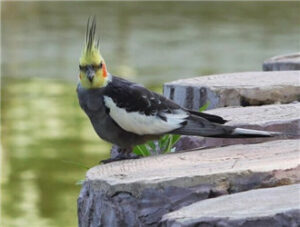
Cockatiel
The Cockatiel (Cockatiel) goes by different names in different regions; in Hong Kong and Taiwan it is often called the Crested Parrot. The Cockatiel is one of the most common medium-sized parrots in the world. Hand-reared young birds are very lively and love to bond with their owners.

Rhesus Macaque
The Rhesus Macaque (Macaca mulatta), also called the yellow monkey, rhesus monkey, or Guangxi monkey, is a primate physiologically very close to humans and easy to domesticate and breed. However, because many monkeys are now protected species, keeping a rhesus macaque as a pet has become a major challenge.

Slow Loris
The Slow Loris (Loris tardigradus) is a small prosimian of the family Lorisidae and genus Loris. It is nocturnal, moves slowly, and prefers to rest atop tree branches. In recent years, due to habitat destruction, hunting for use in traditional medicine, overhunting, and its own biological traits, it is on the brink of extinction.

Scaly-breasted Lorikeet
The Scaly-breasted Lorikeet (Trichoglossus chlorolepidotus) is a beautiful parrot native to Australia. Playful and quite friendly, it is loved by many bird enthusiasts. Although not yet very common in captivity, in the wild it is a widespread lorikeet with a global population exceeding 100,000, and is one of the cheapest lorikeets in Australia and New Zealand.

Red-shouldered Macaw
Macaws are never small in size, and even as the smallest macaw, the Red-shouldered Macaw exceeds 30 cm in body length. Because it can talk, the Red-shouldered Macaw has found its way into many homes. With proper care it lives about 20 years, though records show the oldest individuals can reach 80 years of age.

Blue-fronted Amazon
The Blue-fronted Amazon is one of the more common Amazon parrots, with very bright plumage. Its drawback is a loud call, so it is best kept in a detached house where it will not disturb neighbors. Its diet is varied and easy to manage.
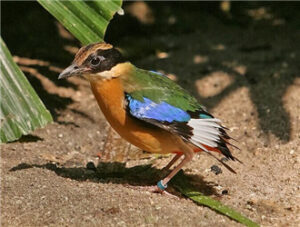
Blue-winged Pitta
The Blue-winged Pitta (Pitta brachyura) gets its name from the eight vivid colors on its body—red, green, blue, white, black, yellow, brown, and chestnut—making it a highly ornamental bird.

Chestnut-Fronted Macaw
The Chestnut-Fronted Macaw rivals the large macaws in talking ability. It has very beautiful plumage, a medium build, and a featherless face covered with small black spots. It originates from the tropical regions of the Americas.

Blue-headed Macaw
The Blue-headed Macaw is the most expensive of the small parrots, mainly because of its scarcity, low popularity, and obscurity—truly a case of rarity commanding a premium. In captivity it is easily tamed and quite robust, adapts well, and like other macaws loves to chew and is destructive, so regular bathing keeps its plumage healthy. It suits a fairly roomy, flight-capable aviary.

Blue-throated Macaw
The Blue-throated Macaw is a native of the tropical Americas and is very similar to the Blue-and-yellow Macaw, sharing the same curious, playful, and friendly personality. With strikingly beautiful plumage and a very long tail, it is a large climbing parrot with a correspondingly large appetite.