Search Results
1092 results for “summer”
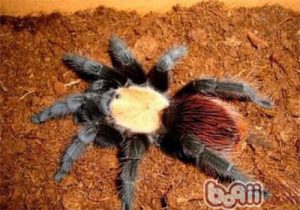
Mexican Golden Back Tarantula
The Mexican Golden Back Tarantula (Aphonopelma chalcodes) is a venomous desert-dwelling spider that can live up to 29 years. Despite its venom, it has a gentle temperament and is increasingly kept as a pet, earning it the nickname 'golden spider.'

Western Hermann’s Tortoise
The Western Hermann's Tortoise (Testudo hermanni) is a common, beginner-friendly tortoise with undemanding environmental needs and good disease resistance, though it carries a relatively high price. Native to Spain and southern France, it is a Mediterranean-species herbivore that also occasionally takes animal prey.

Painted Terrapin
The Painted Terrapin (Callagur borneoensis) is a distinctive member of the painted turtle genus whose carapace resembles a watermelon, with a red streak across the head. Distributed in Malaysia and Indonesia, it is a large, carnivorous, brackish-water turtle that must be kept in low-salinity water.
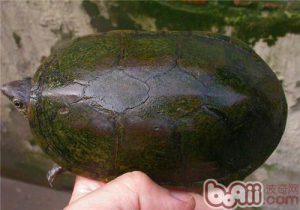
Oaxaca Mud Turtle
The Oaxaca Mud Turtle (Kinosternon oaxacae) is a type of mud turtle that aestivates in summer, burying itself in mud to cool down—hence its name. Living in slow-moving rivers, it hunts fish and shrimp in the water and is an omnivore that leans carnivorous.
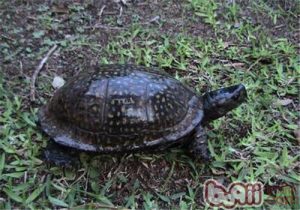
Gulf Coast Box Turtle
The Gulf Coast Box Turtle (Terrapene carolina major) is the largest subspecies of the Common Box Turtle, found along the U.S. Gulf Coast bordering Mexico. A typical omnivore reaching up to 18 cm in carapace length, it grows quickly and is relatively easy to keep.

Travancore Tortoise
The Travancore Tortoise (Indotestudo travancorica) closely resembles the Burmese Star Tortoise in appearance and shares its preference for a dry habitat. Though sometimes considered a subspecies of the Burmese tortoise, this has never been confirmed; it is a shy, inactive tortoise suited to simple husbandry.

Stripe-necked Leaf Turtle
The Stripe-necked Leaf Turtle (Cyclemys tcheponensis) has a broad distribution and healthy wild populations, and even wild-caught individuals adapt well to human care. A semi-aquatic species, it favors shallow water adjoining land; adults prefer fruit while juveniles lean toward meat.

Banded Krait
A strikingly banded, highly venomous elapid of southern China and Southeast Asia - beautiful but dangerous; not a pet and a poor choice for novices.

Heatstroke and Sunstroke in Dogs: Symptoms, Treatment, and Prevention
Heatstroke and sunstroke—together called heat illness—overwhelm a dog's ability to shed heat, sending body temperature dangerously high and damaging the brain and organs. Large and short-nosed breeds are most at risk, and rapid cooling with veterinary care is lifesaving.

Canine and Feline Thelaziosis (Eye Worm Infection): Symptoms, Treatment, and Prevention
Thelaziosis is caused by the nematode Thelazia (eyeworm) that lives under the nictitating membrane of dogs and cats, causing conjunctivitis and keratitis that can impair vision. The worms are physically removed and the eye treated.