Search Results
402 results for “shade”

Vipera ruselli siamensis
The white-browed pit viper (Vipera ruselli siamensis) is a venomous pit viper found in Fujian, Guangdong, and Guangxi in China, and abroad in India, Pakistan, Myanmar, and Thailand. Despite its potent venom, used medically to treat cerebral thrombosis, it is one of the easiest snakes to keep and tolerates a wide range of temperatures.
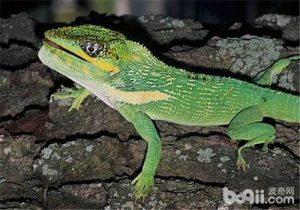
Cuban False Chameleon
The Cuban false chameleon is the largest species in its genus, a diurnal, arboreal lizard from Cuba named for its bony head casque and color-changing ability. Found in forests and orchards, it does best with misting, broad foliage and a 25–30°C daytime temperature.

French Guiana Blue Fang
The French Guiana blue fang (Ephebopus cyanognathus) is a strikingly beautiful, metallic-hued tarantula from the rainforests of French Guiana, valued by collectors for its blue chelicerae. A burrowing species needing warm, humid conditions, it is best left unhandled due to its potent venom.

Texas Tortoise
The Texas tortoise (Gopherus berlandieri) is the smallest of the gopher tortoises, native to southern Texas and northeastern Mexico. Adapted to arid deserts, it feeds mainly on high-fiber plants and is considered a challenging species to keep, so it remains uncommon in captivity.

Northern Ornate Box Turtle
The Northern Ornate Box Turtle is a desert-dwelling box turtle of the genus Terrapene, found in the United States and Mexico. Highly drought-tolerant, it stores water well and endures arid conditions better than other box turtles.
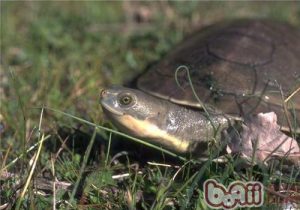
Emydura australis (Australian Big-headed Turtle)
The Australian big-headed side-necked turtle is carnivorous and lives in shallow water, aestivating in pond mud during the dry season. In the wild it consumes large numbers of mosquito larvae, making it beneficial to people, though it is rare and its trade is strictly controlled.

Hilaire’s Toadhead Turtle
Hilaire's Toadhead Turtle (Phrynops hilarii) is a side-necked turtle in the toadhead genus, strongly affected by ambient temperature and closely tied to it in behavior. Delicate and hard to keep in captivity, it is not recommended as a first turtle.

Painted Terrapin
The Painted Terrapin (Callagur borneoensis) is a distinctive member of the painted turtle genus whose carapace resembles a watermelon, with a red streak across the head. Distributed in Malaysia and Indonesia, it is a large, carnivorous, brackish-water turtle that must be kept in low-salinity water.
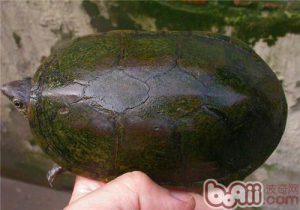
Oaxaca Mud Turtle
The Oaxaca Mud Turtle (Kinosternon oaxacae) is a type of mud turtle that aestivates in summer, burying itself in mud to cool down—hence its name. Living in slow-moving rivers, it hunts fish and shrimp in the water and is an omnivore that leans carnivorous.
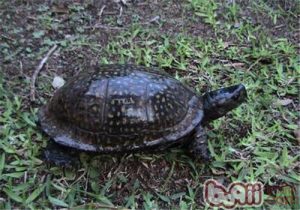
Gulf Coast Box Turtle
The Gulf Coast Box Turtle (Terrapene carolina major) is the largest subspecies of the Common Box Turtle, found along the U.S. Gulf Coast bordering Mexico. A typical omnivore reaching up to 18 cm in carapace length, it grows quickly and is relatively easy to keep.