Search Results
84 results for “scutes”
How to Estimate a Red-Eared Slider’s Age
If you did not raise a red-eared slider from a hatchling, you cannot know its exact age, but for young sliders you can estimate it from a few clues. Each round marking on the belly scutes suggests one year, and the number of concentric rings on the shell plus one gives another estimate. Weight and shell length also track age, and clearer, darker shell rings hint at an older turtle. Sliders usually mature at three to four years at over 17 centimeters, after which aging becomes hard to gauge.
How Often Do Turtles Shed Their Shell?
Turtle shell shedding (ecdysis) is a normal part of growth: as the body enlarges, the old shell can no longer contain it, so a new one forms underneath. Turtles usually begin shedding around age 2 to 3, with each cycle lasting 1 to 3 months, most often in spring and summer when metabolism is high. After age 6, growth stabilizes and shedding slows. Owners must let the scutes detach naturally—never pull them—and boost calcium and nutrition during the process. This article explains the timing, care, and warning signs.
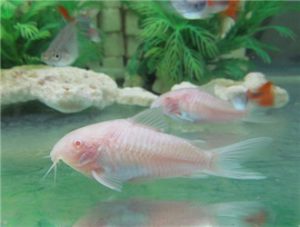
White Corydoras
The White Corydoras is native to South American waters and is now mostly captive-bred. An albino form of the Bronze Cory, it has a milky white body with clear red eyes, is gentle, and is kept in schools. Egg-laying and good with small fish, it suits planted tanks as a bottom fish.

Chinese Paddlefish
The Chinese Paddlefish (Bai sturgeon) is the largest freshwater fish in China. Its very long, elephant-trunk-like snout gives it the common name 'Elephant-nose Fish'. It is a large, fierce fish mainly in the middle and lower Yangtze, also surviving in brackish estuaries and occasionally entering large lakes; it is a semi-anadromous migrant.

Radiated Tortoise
One of the most beautiful star-patterned tortoises - a Madagascan CITES I species that is common in captivity yet wild-endangered. 'The rich man's sulcata'; hardy if set up right.

Large-headed Turtle
A Chinese-endemic 'big-head' turtle that looks like a Reeves' but with a huge triangular head it cannot retract - a threatened, somewhat delicate water turtle.

Eastern Painted Turtle
One of four painted-turtle subspecies - smaller, plainer and a bit harder to keep than the western form, but a classic, hardy North American pet with a red-edged shell.

Map Turtle
A variable, attractive North American water turtle with a raised midline keel and fine 'map' line-markings. Sensitive to poor water quality - keep the tank clean. The common pet forms are the Mississippi and false map turtles.

Hawksbill Sea Turtle
A beautiful but fierce sea turtle hunted for its 'tortoiseshell' shell for centuries - now critically endangered and rare in Chinese waters. Profile is educational only; not a pet.

White-lipped Mud Turtle
A strikingly pretty mud-turtle relative - the 'mango-head' morph can flush yellow onto limbs and shell. Friendly and mid-priced, but it cannot brumate and must be kept heated year-round.