Search Results
95 results for “rough litter”

How Many Kits Does a Rabbit Have Per Litter?
A rabbit can give birth to 3 to 12 kits per litter, with 6 to 8 being most common. But reproductive ability is shaped by many factors, including breed, age, health, and climate. Owners who plan to breed should learn the rabbit's reproductive traits and provide proper care, nutrition, and a suitable environment so the doe is in the best condition to raise a healthy litter.
Why Is My Chinchilla Peeing Outside the Litter Box?
Chinchillas may urinate in the wrong places for several reasons—bad habits, low mood, estrus, territorial marking, or an underlying urinary infection. Each cause needs a different response. The key first step is to clean any accident thoroughly so the scent doesn't train your pet to reuse the spot. Feeding on a fixed schedule keeps a hungry or unhappy chinchilla calm, while separating cages and considering neutering curbs marking during heat. If urination becomes frequent or the urine looks dark, a vet check rules out infection.
Helping Your Cat Love the Litter Box
Most cats use litter naturally, but some need coaching. A clean box, the right litter type and scent, a slow switch when changing brands, and thorough cleanup of accidents all build the habit. This guide covers setup, litter choice, changing frequency, and removing odor traces that invite repeat accidents.
Why Your Cat Stopped Using the Litter Box
When a cat that was neatly using a litter box suddenly starts peeing on the bed or sofa, something is wrong — cats want a clean bathroom as much as we do. The usual causes are a dirty or too-small box, a hooded box they haven't adjusted to, too little litter, poor placement, strong smells from perfume or cleaners, stress, or a medical issue they can't control. Fix it by ruling out each cause, cleaning accidents thoroughly (cats smell far better than we do), staying calm instead of scolding, and gently guiding a newcomer to the box.
How to Choose a Litter Box
Every cat needs a litter box, and picking the right one keeps your cat using it happily. The basic choice is single-layer (best for clumping litters like clay, tofu, or paper) versus double-layer (for crystal or disintegrating wood litter with a drawer below). Covered boxes add privacy but trap moisture and bacteria, while open ones vent better. Specialty styles include toilet-style trainers, top-entry 'snail' boxes (which can trap kittens or seniors), and self-cleaning planet-shaped units great for multi-cat homes but risky if a cat enters mid-cycle. Whatever you choose, scoop daily and wash weekly — but keep a little old litter so the scent stays familiar.
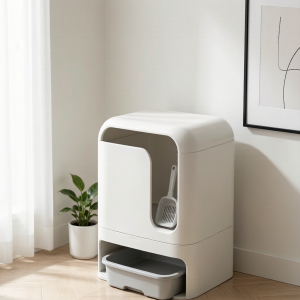
Litter Box Care: Setup and Maintenance
The effort you put into choosing, placing, and caring for the litter box is vital to your cat's health and happiness. Wrong elimination (peeing outside the box) hurts both cat and owner.

How to Train Your Cat to Use the Litter Box
Cats may seem untrainable, but they respond to cues when there is a reward in it for them. Use food rewards paired with a sound to teach any behavior—including proper litter box use. Never punish inappropriate elimination; it raises stress and makes the problem worse.

How to Train a Young Kitten to Use the Litter Box
For orphaned or early-separated kittens, litter training is simple with the right setup, an open, low-sided box in a quiet spot, and a calm routine. Guide the paws after meals, naps, and play, and be patient.

Why Cats Urinate Outside the Litter Box
Cats are naturally fastidious, so inappropriate urination almost always points to a solvable issue, a dirty or cramped litter box, hormonal marking, stress, or a urinary problem. Identifying the trigger is the first step to fixing it.

How to Train a Cat That Poops or Pees Outside the Litter Box
When a cat starts eliminating outside the litter box, it is usually signaling something specific: an unpleasant box, stress, a medical problem, or territorial marking. Figuring out which pattern you are seeing is the key first step, and most cases improve once the underlying cause is addressed.