Search Results
50 results for “reptile care”

How to Care for an Alligator Snapping Turtle
Alligator snapping turtles are aggressive, long-lived freshwater turtles that make challenging but rewarding pets. They are mostly aquatic but must come ashore often to breathe, so provide a rock or basking platform. Keep water deep, about two to three times the shell height, with a land area for shelter and sunning. Change only one fifth to one third of the water weekly to avoid shocking them. Feed a varied carnivorous-leaning diet of fish, shrimp, earthworms, lean meat, and insects plus some greens, and keep the temperature steady at 26 to 32 degrees Celsius. Avoid overfeeding and too much fat or salt, and clean the habitat regularly to prevent disease.
How to Care for a Red-Eared Slider (Brazilian Turtle)
Red-eared sliders, often called Brazilian turtles, are inexpensive and hardy, which makes them a popular first pet turtle. But like any reptile, they need the right setup to stay healthy. Provide a spacious aquarium or tub so the turtle can swim freely, keep the water between 20 and 30 degrees Celsius with a heater, and add a basking platform or dry land where it can climb out to warm up and rest. Without natural sunlight, use a UVB lamp to support calcium absorption and shell development. Change the water regularly and keep the substrate clean to prevent infection. Feed a balanced omnivorous diet of vegetables, fruit, insects, and quality pellets, with calcium and vitamin supplements. With consistent care, your turtle can thrive for years.
Can Tortoises Swim?
Tortoises cannot truly swim. Their body structure is built for land, not water, yet they will not drown instantly if they fall in—their large lungs and broad shell create enough buoyancy to float for a while. That floating ability varies by species; the Aldabra giant tortoise, for example, moves faster in water than on land. But floating is not living: tortoises belong on land, and long soaks risk shell rot and drowning. Keepers should respect this by offering only a shallow soaking area with a ramp, never deep water. Even aquatic turtles can drown if kept too deep, especially as juveniles, so match the habitat to the species.
What Are the Differences Between Tortoises and Sea Turtles?
Tortoises and sea turtles differ greatly in form, habitat, and habits, even though both belong to the order Testudines. Tortoises live on land, needing only occasional soaking and unable to stay in water long; sea turtles spend life at sea, coming ashore only to lay eggs and bask. A tortoise's shell is thick and domed, with short sturdy legs that bear its weight; a sea turtle's shell is thin and smooth, with long front flippers. Tortoises can pull their limbs inside when threatened; sea turtles cannot. Both are omnivorous, but tortoises eat roots, leaves, fruit, and vegetables, while sea turtles favor seaweed. Knowing these differences helps any keeper care for them correctly.
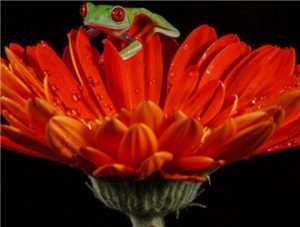
Red-eyed Tree Frog
The iconic big-eyed, green-and-orange hylid of Central American rainforests - fully nocturnal and a live-food specialist. An amphibian, not a reptile.
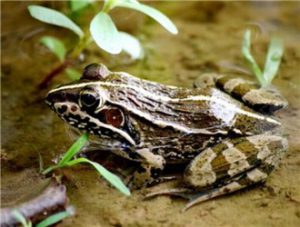
Indian Bullfrog (Tiger Frog)
The stout 'frog of Asia' with tiger-like markings - a China Grade II protected amphibian. Private keeping is illegal; profile is for farmers and breeders.

White-lipped Mud Turtle
A strikingly pretty mud-turtle relative - the 'mango-head' morph can flush yellow onto limbs and shell. Friendly and mid-priced, but it cannot brumate and must be kept heated year-round.
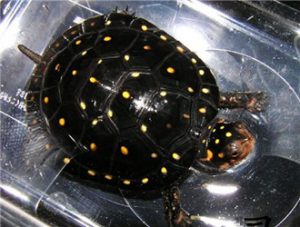
Spotted Turtle
A tiny, starry-spotted North American gem - one of the smallest turtles, beautiful, and of real conservation concern (pricey and declining).

Salamander
Salamanders are tailed amphibians (order Caudata) - smooth-skinned, moisture-dependent relatives of newts. The Chinese fire-bellied newt is the most commonly kept East Asian species.
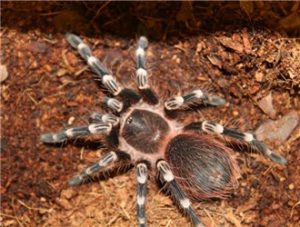
Brazilian Whiteknee Tarantula
The Brazilian whiteknee tarantula (Acanthoscurria geniculata) is a boldly black-and-white striped, fast-growing pet tarantula from Brazil — note that taxonomically it is an arachnid, not a reptile, but it is grouped here with the reptile-archive keepers' species.