Search Results
1780 results for “red eyes”

European Green Lizard
The European green lizard (Lacerta viridis) is a bright green lizard of European grasslands and hedgerows. Males show a vivid blue throat in the breeding season, while females may be brown or green; being territorial, they are best kept in pairs with ample space.
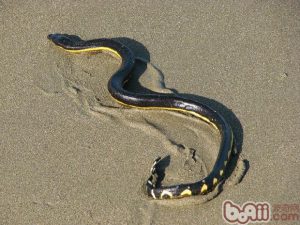
Yellow-bellied Sea Snake
The yellow-bellied sea snake (Pelamis platurus) is a pelagic, highly venomous sea snake found across the warm oceans of the Indian and Pacific regions. It spends its entire life at sea, even giving birth to live young in the water, making it one of the most widely distributed snakes in the world.
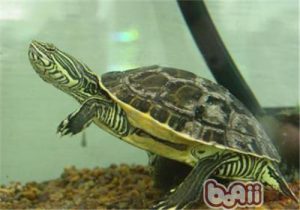
Eastern Chicken Turtle
The Eastern Chicken Turtle is uncommon in China, as its plain appearance is not popular, and as a tropical species it is rare in cold regions.
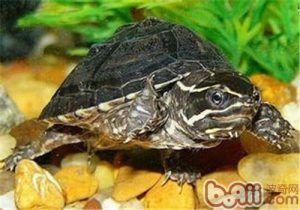
Mud Turtle
The Mud Turtle is not a single species but a group of turtles sharing common traits in body structure or distribution, classified under one family. The family Kinosternidae includes the mud turtles and musk turtles.

Texas Map Turtle
The Texas Map Turtle lives in the Colorado River basin of the Edwards Plateau in Texas and is a relatively common map turtle, though priced higher; it resembles the Mississippi Map Turtle and is sometimes hard to tell apart. It is the smallest-shelled of all map turtles, with no prominent keel.

East African Black Mud Turtle
The East African Black Mud Turtle is scarce in the wild and thus rarely kept in captivity; in China it is uncommon, though other side-neck species are seen more often, indicating its rarity and need for protection. It eats both plants and animals, living in shallow water and occasionally climbing onto land.

Adanson’s Mud Turtle
The Adanson's Mud Turtle is a small, seldom-seen aquatic turtle from central Africa, a minor member of the African side-neck genus. Although not internationally listed as endangered, it is rarely traded.
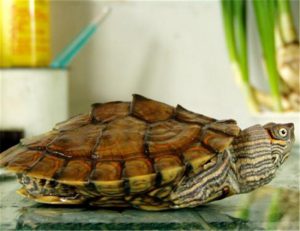
Graptemys pseudogeographica (False Map Turtle)
The false map turtle is a map turtle that is less commonly kept than sliders, needing clean water and a quiet environment. It is omnivorous but especially loves shrimp, and is distinguished by bright yellow markings behind the eyes.
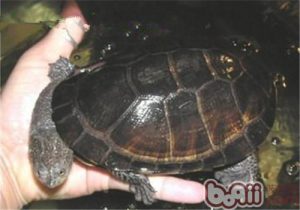
Acanthochelys radiolata (Brazilian Radiolated Swamp Turtle)
The Brazilian radiolated spiny-necked turtle is a rare Brazilian species in the genus Acanthochelys, named for the radiating pattern on its carapace. It is difficult to keep and seldom seen in captivity.

Emydoidea blandingii (Blanding’s Turtle)
Blanding's turtle is a semi-aquatic turtle of the Great Lakes region, gentle and cold-hardy, with a smooth black helmet-shaped shell and a yellow hinged plastron marked with black blotches. It is omnivorous and adapts well to captivity.