Search Results
1780 results for “red eyes”

The Secret Behind Cats With Two Different Eye Colors
Odd-eyed cats - sometimes called "strange eyes" - have two differently colored irises and usually turn up in white cats; among purebreds, matching eye color is the norm, so odd eyes are typically from mixing. The condition, heterochromia iridis, is not a disease. Japan once called gold-and-blue eyed cats a symbol of luck, and Thailand's native Siamese region named the look "diamond eyes." The cause is the dominant white (W) gene, which suppresses pigment cells; without them the iris looks blue, and the same missing cells also fail to form the ear's sound sensors, which is why many white blue-eyed cats have hearing loss. About 60-80 percent of white blue-eyed cats have some deafness, and a blue-eyed side in an odd-eyed cat carries a 30-40 percent chance of deafness on that ear.

Is a Cat’s Vision Good or Bad
A cat's visual sharpness is only about one-tenth of a human's - roughly 0.1-0.2, enough to make out objects around 10 meters away and blurry at that. The trade-off comes from the tapetum lucidum, a mirror-like layer that boosts dim light about 40 percent so cats see in one-sixth the light humans need, at the cost of clarity. Cats are nearsighted and built for the hunt: their best focus is about 75 cm, and they track moving prey (around 15-60 degrees per second, like a mouse) far better than still objects. They see blue-to-green but not red, and their wider 250-degree field of view beats our 200.
What Are the Symptoms of Parvovirus (Parvo) in Dogs?
Canine parvovirus presents in two forms — enteric and myocardial. The enteric form starts with lethargy, poor appetite, drowsiness, and fever, then progresses to soft stools, diarrhea, and vomiting with foul-smelling, soy-sauce- or rotten-tomato-colored watery stool. The myocardial form often shows no warning signs and can be fatal within hours.

Why Your Dog Has Tear Staining and Eye Discharge
A healthy dog's eyes are bright with little or no tearing or crust. When discharge increases, it is time to check the eyes, and a careful owner may reach for eye drops. The causes run from simple irritation to structural and whole-body disease, so the pattern of the discharge matters.
Golden Arowana Care and Husbandry
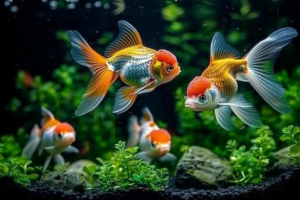
The golden arowana is a large, striking ornamental fish that needs generous space—a pond or an aquarium over 120 cm long. It prefers soft, slightly acidic water and a steady 24–26°C (28–30°C for silver and black varieties), with new and old water kept within 2°C to avoid shock. Good filtration, an air pump for oxygen, and a covered tank prevent stress and disease. Aim for 3–4 hours of sunlight daily, or 5–7 hours of full-spectrum lighting, to support growth and color. Sound husbandry—clean water, stable temperature, sensible feeding—is the best defense against the common signs of illness: dull color, sluggish swimming, and drooping eyes.

Why You Should Not Tease Your Dog
Beyond spoiling a pet, owners often tease it for fun - but careless teasing has endless harms. Dogs are highly sensitive and react fast to tiny changes in environment, weather or moving objects. Teasing destroys normal behavior rules, and once outside, bad habits explode: sudden aggression, chasing other dogs, barking. Excitable and manic dogs are unpredictable risks. To prevent bites, learn your dog's type, always use a leash, stay calm around others, and never tease - teasing erodes patience and makes a dog impulsive.

What Breeds Are Used as Guide Dogs?
Selecting a guide dog is a strict process—not every dog qualifies. A good candidate must be calm, highly trainable, neither timid nor hyperactive, and gentle, able to focus without being easily distracted. The most common guide dog breeds are the Labrador Retriever, Golden Retriever, German Shepherd, and Poodle, all known for steady temperaments, loyalty, obedience, and high intelligence. After specialized training they become the eyes and faithful helpers of people who are blind. Guide dogs earn deep respect for the independence they give their handlers; because a guide dog gives its handler dignity and freedom, protecting that partnership is a shared responsibility we should all honor.

What Causes Feline Rhinotracheitis (Cat Flu)?
Feline rhinotracheitis, commonly called cat flu, is one of the most frequent infectious diseases in cats. A cat can look healthy at the breeder yet sneeze, runny nose and weepy eyes days after coming home - because the culprit herpesvirus lies dormant in nerve cells and flares when environment or nutrition changes. Importantly, cat flu is not caused only by herpesvirus; calicivirus, chlamydia, mycoplasma and Bordetella are also agents. This article explains what cat flu is, its varied causes, and how to tell the agents apart by symptoms - always confirm with a vet.

Hookworms in Dogs: Symptoms and Deworming
Hookworms are intestinal parasites named for their hook-like mouthparts, which anchor them to the gut wall. Only about an eighth of an inch long, they are hard to see, yet they drink large amounts of blood from tiny vessels and can inflame the gut, cause anemia, and threaten life, especially in puppies. Dogs catch them by mouth, through the skin, or from mother to pup via placenta and milk. Signs include pale gums, weakness, weight loss, and bloody diarrhea. Diagnosis is a fecal float, and treatment is regular deworming plus a repeat dose to kill newly matured worms.

Does Heterochromia Affect a Cat’s Vision?
Heterochromia, or odd-eyed cats, does not affect vision, and these cats are usually striking. But most have a hearing defect: the ear on the blue-eyed side often has impaired hearing, a beautiful flaw. Because cats rely on hearing to move around, this can affect their actions. Owners should understand if an odd-eyed cat ignores them because it cannot hear, and should fit guards and supervise them. Their eyesight is normal; only their hearing differs, and it does not harm general health. Adopt with commitment, and never abandon them for it.