Search Results
79 results for “pet bird”
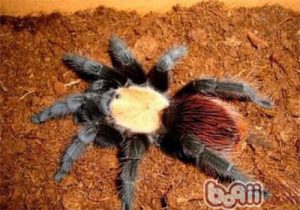
Mexican Golden Back Tarantula
The Mexican Golden Back Tarantula (Aphonopelma chalcodes) is a venomous desert-dwelling spider that can live up to 29 years. Despite its venom, it has a gentle temperament and is increasingly kept as a pet, earning it the nickname 'golden spider.'

Acanthoscurria insubtilis
The Bolivian whitefront (also called the Bolivian whiteknee), Acanthoscurria insubtilis, is native to Bolivia. A slightly moist substrate of peat blocks or coconut fiber is recommended.

Lasiodora klugi
The Bahia scarlet tarantula (Lasiodora klugi) is native to the tropical rainforests of Bahia state, Brazil.

Phormictopus cancerides
The Haitian brown tarantula (Phormictopus cancerides), also known as the Dominican blue tarantula, is native to the tropical rainforests of Haiti and Brazil. It is one of the classic pet tarantula species kept by enthusiasts.

Histoplasmosis in Dogs and Cats: Symptoms, Treatment, and Prevention
Histoplasmosis is a highly contagious granulomatous disease caused by Histoplasma capsulatum.

Understanding Aggressive Behavior in Cats
Given their size, cats can be formidable opponents. Unlike dogs, cats have three weapons: an open mouth with sharp teeth and four dexterous paws with needle-like claws, making them harder to control.

Signs Your Cat Loves You
Your cat loves you but you do not know it, what a sad thing. Today we list 12 moments when a cat shows its love for you.

Can Cats Eat Grass? Benefits, Risks, and Growing Cat Grass
Many cats nibble grass, and it isn't necessarily a problem — grass can supply folic acid and fiber and help with hairballs. The real risks come from lawn chemicals and toxic houseplants. Here is the safe way to offer it.

Signs Your Cat Is Happy
Cats can't tell us in words, but a happy cat shows it clearly — through voice, body language, curiosity, play, sleep, grooming, and appetite. Reading these cues also tells you how to cheer up a cat that isn't.
- « Previous
- 1
- …
- 6
- 7
- 8