Search Results
134 results for “older dog”
Reading CoQ10 Test Data: What ‘Proven’ Should Mean
With so many CoQ10 products making bold claims, the only fair way to choose is to ask three questions: are the ingredients safe, is the content sufficient, and is there authoritative data behind the effect? This guide explains what genuinely 'proven' looks like, what a deeper formula contains, and why the right physical form matters as much as the formula for real-world feeding.

Large Mudskipper
The Large Mudskipper (Boleophthalmus pectinirosris) is a warm-water intertidal fish from China's coastal regions that hops across mud using its pelvic fins. It is solitary, burrow-dwelling, breathes through skin and tail, and is not hard to keep. It is also used as food.

Eastern Painted Turtle
One of four painted-turtle subspecies - smaller, plainer and a bit harder to keep than the western form, but a classic, hardy North American pet with a red-edged shell.
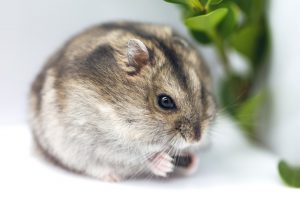
Winter White Dwarf Hamster
The Winter White Dwarf Hamster (Phodopus sungorus), also called the Djungarian hamster or Russian dwarf, is the easiest and tamest of the small hamsters and turns white in winter. A solitary species, it needs a safe cage, a wheel, and a careful diet free of onion, chocolate, and apple seeds. Lifespan 2–3 years.

Canine and Feline Lymphosarcoma
Lymphosarcoma is a malignant cancer of the lymph nodes and lymphoid tissue that affects both dogs and cats, most often dogs over four years of age. It presents in multicentric, alimentary, and thymic forms, each with distinct clinical signs. While incurable, prompt chemotherapy can extend life from a matter of weeks to 6–24 months.

Canine and Feline Brain Tumors
Brain tumors in dogs and cats are most often meningeal or glial tumors that appear in middle-aged to older pets, with some breeds such as Boxers and Bulldogs overrepresented. They compress brain tissue and cause gradually worsening neurological signs including behavior changes, circling, head tilt, blindness, and seizures.

Canine and Feline Ovarian Tumors
Ovarian tumors are uncommon in dogs and cats and usually arise as a primary growth, most often a granulosa cell tumor in older females. Hormone-secreting types cause persistent estrus, while others simply enlarge the abdomen; surgery is typically curative.

Canine and Feline Liver Tumors
Liver tumors in dogs and cats may be primary or spread from elsewhere, with signs much like chronic liver inflammation — poor appetite, weight loss, and vomiting. Slow-growing tumors confined to one lobe can often be removed surgically.

Canine and Feline Gastrointestinal Carcinoma
Gastrointestinal carcinoma is an uncommon but serious gut cancer in dogs and cats; when it arises in the stomach it thickens the wall and leads to ulcers and infection. Early surgical removal offers the best chance, while advanced cases — especially rectal — carry a poor outlook.

Canine and Feline Gingival Epulis
A gingival epulis is a non-cancerous growth arising from the periodontal ligament, most often in dogs over six years old. It causes bad breath, ulceration, and bleeding, and is managed by surgical removal before it damages surrounding bone.