Search Results
1892 results for “male female”

Chinchilla
The Chinchilla, with the English name Chinchilla, originates from Britain and descends from the Angora and the Persian. Some call it the artificial cat, hinting it was deliberately bred by humans. Notably, the Chinchilla was the first fully human-bred cat, appearing in 1894.
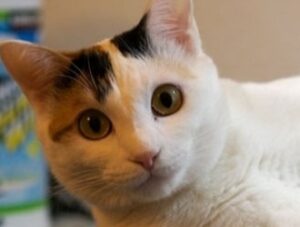
Japanese Bobtail
The Japanese Bobtail, also known as the Lucky Cat (Maneki-neko), is very popular in Japan. Cat lovers, upon hearing 'lucky,' want one. It is a native Japanese breed with a history tracing back centuries. Bred in the US after introduction, it is said an American cat lover in Japan found a cat with a short rabbit-like tail and brought several back after WWII; these are the ancestors. The Japanese Bobtail sits with one front paw raised, said to represent good fortune.

Persian
The Persian cat, also called Persian, Chinchilla, or Himalayan, with the Latin name Persian, represents nobility in people's minds. In China, most people's first pet cat was a Persian. However, most kept Persians are not purebred but non-purebred bred by merchants to meet the market; purebred Persians cost over a thousand dollars. Originating in Persia (Iran), it was developed in Britain over more than 100 years from Afghan longhair and Angora cats.

Scottish Fold
The Scottish Fold's ears fold neatly forward over the head, earning it a place among the 'elf' cats. It is said that in 1961, a farm cat in Scotland gave birth to a litter containing a strange kitten with white fur, folded ears, and an owl-like face. Named after its birthplace near Coupar Angus, Scotland, and its folded ears, the breed became known as the 'Scottish Fold'.

Ocicat
The Ocicat, despite being mistaken for a wild cat, is a wholly domestic breed developed in the United States from Abyssinian, Siamese, and American Shorthair ancestors. After a winding path to recognition, a decade of bloodline management won it acceptance. With its spotted, wild-looking coat and friendly, active nature, the Ocicat is a striking yet affectionate companion.

Tabby Cat
The Tabby Cat originated in the United States. It has a copper-brown base coat with pure black tabby pattern markings and a lighter copper-colored ring surrounding them. The neck is relatively short and muscular. The coat is short, thick, and stiff in texture. The personality is independent, lively, and alert. With strong rat-catching ability, it is beloved by ordinary people. It features a classic tabby pattern and red tortoiseshell markings of varying shades, both clearly visible. The paw pads are red or black. The breed trait is that tortoiseshell tabby cats, or 'tortie tabbies,' are very likely to be female only. It is a natural tabby breed formed through thousands of years of natural selection.

Chinese Li Hua
Chinese Li Hua, also known as the Chinese rural cat, is an umbrella term for China's native domestic cats. Among them, the Chinese Li Hua (Li Hua Mao) was officially recognized by the CFA in 2010 as China's own native purebred cat. This article introduces the common varieties of Chinese rural cats, including the Li Hua, tabby, calico, and tuxedo cats.

American Shorthair
Among cat breeds, the American Shorthair is hugely popular with cat lovers. Its honest, good-natured looks are enough to make us want to bring one home. Below we discuss the American Shorthair breed, along with its price and how to buy one.

Why Does a Lump Appear Under a Rabbit’s Throat?
A lump under a rabbit's throat may just be a dewlap, but it can also mean ringworm, infection, or internal heat. Identify the cause before treating.

How to Care for a Chinchilla After Birth
After birth a chinchilla mother is fragile and needs close care, and the kits need attention. Check that her vulva is closed and nipples produce milk without cracks; keep the room above 20°C; boost her protein, minerals, and calcium (alfalfa, 5–10 g oatmeal daily); separate the male within 24 hours (she ovulates then); hand-feed kits if milk is short using infant formula; watch for constipation (apple quarter + hay); and track kit weight daily — gain after day 3 means nursing well.