Search Results
1892 results for “male female”
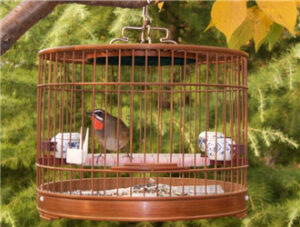
Siberian Rubythroat
The Siberian Rubythroat (Luscinia calliope), also called the Red-throated Nightingale, Red-tailed Robin, or Red-necked Bird, is a typical ground-dwelling bird. Its song is varied and pleasant, with most singing at dawn and dusk, and is especially beautiful.

Yellow-browed Warbler
The Yellow-browed Warbler (Yellow-browed Warbler) is a very active little bird, smaller than a sparrow, with its type locality in India. It is listed in the 'National Protected Terrestrial Wildlife of Beneficial or Important Economic and Scientific Value' directory issued by the State Forestry Administration on August 1, 2000.

Java Sparrow
Wild Java Sparrows have plain plumage, but selective breeding has produced many color variants. Now found worldwide, the Java Sparrow has been bred into various new colors and has become a world-famous cage bird.
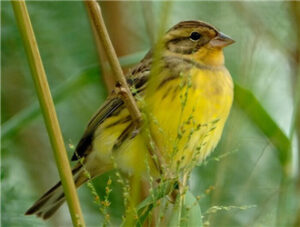
Emberiza aureola
The Yellow-breasted Bunting (Emberiza aureola), also known as the Rice bird, has two subspecies. Due to various causes the species is now endangered and could go extinct within ten years. The state has listed it in the national directory of beneficial or economically and scientifically valuable terrestrial wildlife under protection. It is mainly distributed from northern Europe to Siberia, northern Japan, and China, wintering in India and other regions.
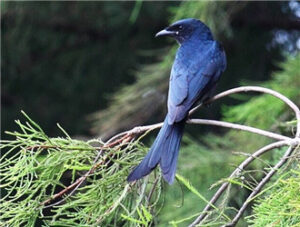
Black Drongo
The Black Drongo (Dicrurus macrocercus) is fierce by nature, especially during the breeding season when it is highly territorial, and is usually very active and likes to fight in groups. In the wild it feeds mainly on insects. It is distributed from Iran and Afghanistan through South and Southeast Asia to Java and Bali.

Brown Shrike
The Brown Shrike (Lanius cristatus), also known as the Red-tailed Shrike, Brown Bush Shrike, Tiger Shrike, and Little Shrike, likes moist habitats, feeds on insects, and occasionally eats a little fresh grass. It is mainly distributed across Siberia, from the Irtysh River and Altai east to the Anadyr Basin and Kamchatka Peninsula, as well as Korea, Mongolia, and Japan; in winter it is also seen in India, Indochina, Malaysia, the Philippines, and Indonesia.

Oriolus
The Oriole (Oriolus), also called 'oriole' or 'golden oriole', is the subject of many poems and is very famous. Females are mainly distributed across the tropical Eastern Hemisphere except New Zealand and the Pacific islands. They breed in eastern China and migrate south to India in winter.

Eurasian Siskin
The Eurasian Siskin (Carduelis spinus), also called the yellow bird, is mainly yellow as its name suggests. It is distributed from Europe to Egypt and east to Japan, the Korean Peninsula, and China, living in forests, hills, and plains; in autumn and winter it is more often seen in plains or sheltered foothill belts.
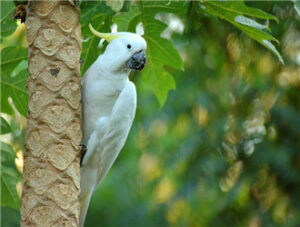
Sulphur-crested Cockatoo
The Sulphur-crested Cockatoo (Cacatua galerita) is beautiful in appearance, but those unfamiliar with it may not realize at first glance that it is a parrot. Its body color is very pale white, and most distinctively it has a yellow crest that fans up like a blooming sunflower when the bird is angry.

Siberian Chipmunk
The Siberian Chipmunk has the habits of storing food and hibernating; hibernation occurs in the wild, while in warm indoor captivity it does not need to hibernate. Wild chipmunks are mainly distributed in North China, Northwest China, and Northeast China. Their fur is of good quality and attractive.