Search Results
25 results for “ingrown eyelashes”

Is Your Dog Always Tearful? Watch Out for Ingrown Eyelashes
An ingrown eyelash (distichiasis) curves inward and constantly rubs the cornea and conjunctiva. It's common in flat-faced breeds (Pekingese, Pug, Bulldog), long-haired breeds (Maltese, Shih Tzu), and seniors, causing chronic tearing, tear stains, conjunctivitis, keratitis, and even corneal perforation and vision loss. A few lashes can be plucked; many need electrolysis, cryotherapy, or entropion surgery.
Why does my dog keep tearing up / have watery eyes?
Constant tearing can be caused by ingrown eyelashes, foreign objects, blocked tear ducts, internal heat, or eye infections. Clean out debris with saline, trim irritating fur, and see a vet if infection or a blocked duct is suspected.
Why are my Labrador’s eyes red?
Red eyes in a Labrador can come from irritants (dust, sand, hair) — flush with saline or eye wash. Ingrown eyelashes also cause redness and need trimming or surgery. Redness with tearing, lethargy, or discharge may mean conjunctivitis, keratitis, or iritis — see a vet.
Why do cats tear up (watery eyes)?
Watery eyes can stem from a congenital blocked nasolacrimal duct, irritation by smells or dust, or entropion/ingrown eyelashes. Persistent tearing from the latter needs veterinary treatment.
What should I do if one of my cat’s eyes is tearing, has discharge, and won’t open?
Tearing, discharge and an inability to open one eye usually point to an eye disease such as conjunctivitis, keratitis or ingrown eyelashes. A vet exam is recommended, and ingrown lashes may need surgery.
Cat Eye Swelling and Tearing: A Recovery Case
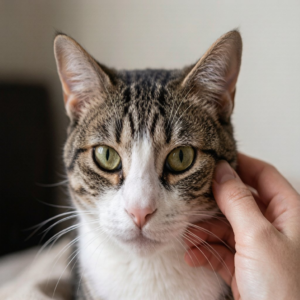
A cat with one swollen, tearing, discharging eye—but no sneezing or runny nose—most likely has a bacterial conjunctivitis rather than a viral one. Ingrown eyelashes or a foreign body can be the trigger. Oral amoxicillin plus antibiotic eye drops, an E-collar, and a dim, clean environment brought clear improvement in a few days. An ingrown lash, though, needs a vet to remove.
Why Does My Dog Have Bad Tear Stains?
Tear stains form when tears (water plus salts and protein) evaporate and leave dark-brown marks—and they can signal health trouble, not just looks. Causes: poor eye cleaning (dust, smoke irritation), ingrown eyelashes from eyelid inward-rolling (needs vet care), unclean ears (mites or bacteria stimulate tear glands), and oily or salty food (switch to low-salt natural kibble and more water). Some breeds (Pekingese, Chihuahua, Pug) have genetic over-tearing from bulging eyes; severe cases may need a tear-duct opening surgery. Disease (blocked ducts, tear-gland inflammation) needs a vet. Daily: gentle cleaning, trim surrounding hair, light eye massage a few times a week, and a bland diet.
What causes a cat to tear up or have watery eyes?
Tearing in cats can stem from many issues, including ingrown eyelashes, conjunctivitis, viral infection, blocked tear ducts, foreign-object irritation, or diet. Treatment depends on the underlying cause, so identifying it is key. Cats that frequently eat salty, oily food may also tear more, so managing their diet helps.
How do I treat a puppy with tearing eyes?
A puppy's tearing eyes can come from infection, a foreign object, a blocked tear duct, a breed trait, or ingrown eyelashes. Flat-faced breeds like the Pekingese and Shih Tzu are prone to epiphora and tear stains — just wipe discharge often. Rinse with saline or a pet eye wash; if it persists, see a vet.
Why does my cat tear from only one eye?
A cat tearing from only one eye may have a foreign object, diet-related 'heat,' ingrown eyelashes, trauma, conjunctivitis, or keratitis. Remove any foreign object, lighten an oily or salty diet, and identify the underlying eye disease before treating.