Search Results
29 results for “hunting instinct”
Why Are Cats So Good at Catching Mice?
Cats have a natural gift for catching mice, and it comes down to biology, instinct, and learned skill. As natural predators, they combine sharp hearing, a flexible body, retractable claws, and excellent night vision to track prey even in the dark. Their hunting instinct—inherited from wild ancestors—gives them quick reflexes and accurate judgment. Add powerful jaws and curved claws that pin a mouse instantly, plus a deep familiarity with rodent habits, and cats become formidable hunters. Even in modern homes, where catching mice is no longer necessary, that instinct survives—shown when a cat pounces on a toy or ambushes its owner in play.
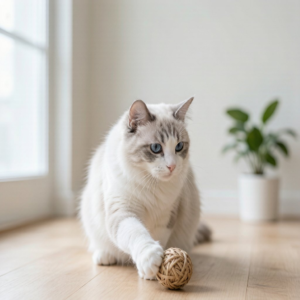
Why Does Your Cat Keep Pushing Things Off the Table?
When your cat knocks your cup or pen to the floor, it isn't pure mischief. A 2019 Cornell study found domestic cats keep about 80% of their wild hunting instinct, so they treat desk objects as "motionless prey" and the push is a mock hunt, especially for round things that roll like escaping prey. Cats are also smart readers of your mood; any big reaction, scolding or a wry laugh, teaches them that pushing things earns attention, and bad attention beats being ignored. Frequent exploring is actually a mental-health sign. Curb it with a designated play zone, daily hunting games, ignoring the act, and physically securing valuables.
Why Won’t Your Cat Let You Touch Its Paws? (And How to Trim Nails)
A cat's paws are vital tools for hunting, defense, climbing, and sensing, and the hunting instinct remains even in pets, so a paw grab can feel like a threat. Paws also carry five times the nerve endings of a human fingertip and hold scent glands in the pads used to mark territory, making them extra sensitive. If a usually tolerant cat suddenly refuses paw contact, suspect pain from interdigital dermatitis, a paw injury, or arthritis, and watch for limping, obsessive licking, red swollen pads, or stiff wrists. A gradual, reward-based training plan helps most cats accept handling, but always stop if the cat shows stress.
Are Dogs or Cats Smarter?
The question of whether dogs or cats are smarter has no simple answer, because intelligence depends on how we define it. Physically, dogs have roughly twice the number of neurons as cats and a longer history of living alongside humans, which shows in their trainability. Many dogs understand over two hundred words and read human body language and emotion with ease. Cats, however, are independent problem-solvers that learn through observation, excel at hunting instincts, and can pick up simple routines like using a litter box. Rather than competing, each species displays a different kind of cleverness: dogs through social cooperation, cats through intuition and independence. In the end, both bring unique joy and companionship, so the scoreboard matters far less than the bond you share.
What Your Cat Is Feeling When It Acts Cute
A cat's affectionate, adorable moments are not random - each has a meaning. When a cat rolls at your feet, belly up, twisting side to side, it is often marking a warm, safe spot or scratching an itchy back (check for fleas if the itching persists). A cat's nose, with a sense of smell six to seven times keener than ours, gathers information by sniffing - at a new place, a stranger, or even your finger. A tail-up, wiggling rear before a pounce is the awake hunting instinct at play. And when a cat stares at "nothing," it is usually listening to high-pitched sounds we cannot hear; a cat that meets your gaze trusts you and may be asking for attention.
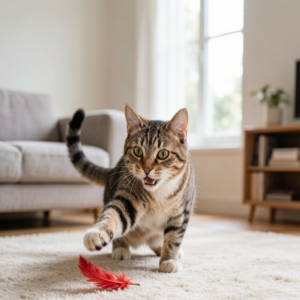
Why Does My Cat Attack Me?
A cat that attacks its owner is often reacting to misunderstood play or training. Using hands or feet to play can teach a cat to treat body parts as prey, triggering its hunting instinct to strike. To prevent this, never encourage such play and redirect with a wand toy. Attacks can also be a bid for attention, in which case ignoring the behavior works best. Kittens that bite usually missed socialization training, which teaches them how to interact with people. Other causes include fear-based defense, pain or illness, and redirected anger. Reading the context helps you respond safely.

Top 5 Dog Breeds That Love to Bark—and What to Do
Some dogs are born loud. The Chihuahua, Beagle, Corgi, Pomeranian, and Yorkie top the list of natural talkers, driven by insecurity, hunting instinct, territoriality, or separation anxiety. None of this is hopeless—steady training, enough exercise, independence building, and careful desensitization to triggers can quiet even a chronic barker. Know the breed's voice before you bring one home.
Why does my cat pounce on me and then run away?
A cat that pounces on you and then darts off is usually practicing its hunting instinct or trying to get your attention. Domestic cats keep their natural predator drives, and without littermates to play with, a kitten taken home at 2-3 months may rehearse those hunting moves on you - or simply pounce and flee as a way of inviting interaction.

How to Make Your Cat Happy Through Play
Play is how cats bond, learn, and burn energy. The right toys and short, regular sessions satisfy their hunting instinct and build a closer relationship without overtiring a kitten.

100 Essential Tips Every New Cat Owner Should Know
Bringing home a first kitten is exciting but daunting, and poor care can hurt both of you. These 100 essentials cover diet (life-stage food, toxic grapes/chocolate/onion/garlic, no bones or raw meat, fresh water), daily care (brushing, nail and ear cleaning, litter hygiene, n+1 boxes), health (vaccines at 8–12 weeks, deworming, normal temperature 38–39.2°C, spay/neuter, no human meds), behavior (slow blinks, tail talk, no punishment), and home safety (screens, hiding wires, toxic plants, no smoke). Read them once and you'll share a calmer, healthier life with your cat.