Search Results
136 results for “head feathers”
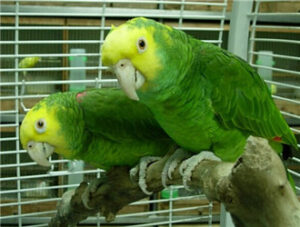
Double Yellow-headed Amazon
The Double Yellow-headed Amazon is a striking parrot with a yellow head, native to Central America and Mexico. A strong talker and affectionate pet, it is now threatened in the wild by habitat loss and trapping, with some subspecies listed as protected.

Dusky-headed Conure
The Dusky-headed Conure (Aratinga weddellii), also known as the Dusky-headed Parakeet, has a dusky-gray head as its name suggests. It feeds on seeds, fruit, nuts, berries, and flowers. Usually found in pairs, gathering in small flocks during breeding, and distributed in Brazil, Colombia, and Peru.

Black-headed Caique / Black-crowned Parrot
The Black-headed Caique is an easily recognized parrot; from its name you can guess its head is black, like wearing a black cap. Because of this distinctive look and its playful personality, the Black-headed Caique attracts much attention and affection. Compared with some birds, it is long-lived, averaging about 30 years.
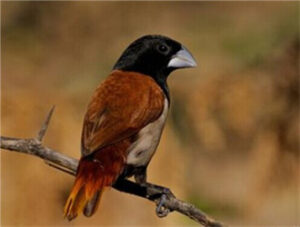
Black-headed Munia
The Black-headed Munia (Lonchura malacca) is a small bird whose plumage is mostly deep chestnut, a feature that gives the species its name. It has a wide distribution, mainly found in the Philippines and Taiwan.

Scaly-headed Parrot
The Scaly-headed Parrot (also known as Maximilian's parrot) currently has four subspecies. It is the most intelligent and most talented talker among the Pionus genus of parrots. It is mainly distributed across Argentina, Bolivia, Brazil, and Paraguay.
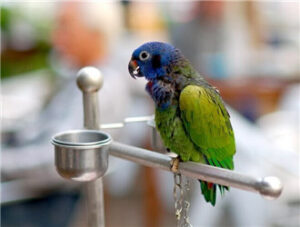
Blue-headed Parrot
The Blue-headed Parrot (Pionus menstruus) is a relatively small, slightly plump parrot with a short tail that can live up to 25 years with good care. It is one of the more commonly kept parrots of its genus, with three subspecies that differ mainly in the depth and spread of the blue coloration on the head.

Blue-headed Macaw
The Blue-headed Macaw is the most expensive of the small parrots, mainly because of its scarcity, low popularity, and obscurity—truly a case of rarity commanding a premium. In captivity it is easily tamed and quite robust, adapts well, and like other macaws loves to chew and is destructive, so regular bathing keeps its plumage healthy. It suits a fairly roomy, flight-capable aviary.
How long after birth do lovebirds grow feathers?
Lovebirds start growing feathers at about 10 days, in order head, wings, tail, belly, neck, fully by 30-35 days. Females flap wings at 20 days, practice short hops and flight at 35, fly about 3 m at 40; then the owner can clip wings to prevent escape.
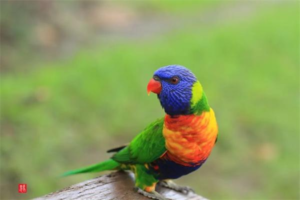
How to Clip a Parrot’s Flight Feathers Safely
Clipping a parrot's flight feathers lets it fly safely in a small space without escaping—protecting both bird and owner while preserving some flight ability. It is a skill that needs patience and practice to avoid injury. The key is to trim only the outer flight feathers (never the down feathers or blood-filled shafts), keep both wings symmetrical, and cut about half to two-thirds at a 90-degree angle. Done calmly on a relaxed, well-fed bird and finished with a gentle antiseptic, feather clipping is a safe, optional management tool.
How to Tell Parrot Fluffing from Normal Puffing
Fluffing often means illness, while normal puffing is benign. Tell them apart by head feathers, breathing rate, and droppings. Learn the differences and what to do.