Search Results
1090 results for “fish feeding”

Adanson’s Mud Turtle
The Adanson's Mud Turtle is a small, seldom-seen aquatic turtle from central Africa, a minor member of the African side-neck genus. Although not internationally listed as endangered, it is rarely traded.
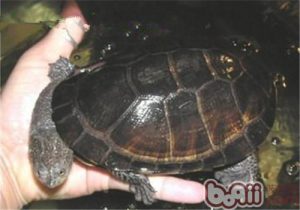
Acanthochelys radiolata (Brazilian Radiolated Swamp Turtle)
The Brazilian radiolated spiny-necked turtle is a rare Brazilian species in the genus Acanthochelys, named for the radiating pattern on its carapace. It is difficult to keep and seldom seen in captivity.

Emydoidea blandingii (Blanding’s Turtle)
Blanding's turtle is a semi-aquatic turtle of the Great Lakes region, gentle and cold-hardy, with a smooth black helmet-shaped shell and a yellow hinged plastron marked with black blotches. It is omnivorous and adapts well to captivity.

Batagur baska (Northern River Terrapin)
The Batagur turtle is one of the largest freshwater turtles in Asia, living in Andaman coast estuaries from Bangladesh to Vietnam and feeding on mangrove seeds. Once thought extinct in Thailand, it is now classified as Critically Endangered and protected under CITES Appendix I.
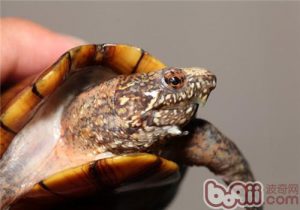
Kinosternon acutum (Tabasco Mud Turtle)
The Tabasco mud turtle (Kinosternon acutum) is a medium-sized mud turtle prized for its vivid head striping, found mainly in the Mexican Caribbean lowlands. It is rarer than the narrow-bridged musk turtle and seldom seen on the market.
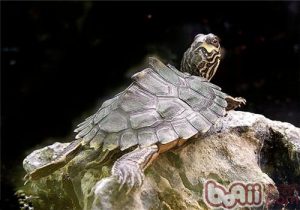
Graptemys pulchra (Alabama Map Turtle)
The Alabama map turtle resembles the red-eared slider in habits, with head striping and a protruding keel. Named for its map-like yellow markings, it feeds mainly on aquatic clams and snails, crushing shells with its hard jaws.

Pseudemydura umbrina (Western Swamp Turtle)
The Western swamp turtle (Pseudemydura umbrina) is one of Australia's smallest turtles; males have a 155 mm shell and weigh 550 g, while females reach 135 mm and 410 g. Its coloration varies with age and habitat, and it is listed as Critically Endangered.
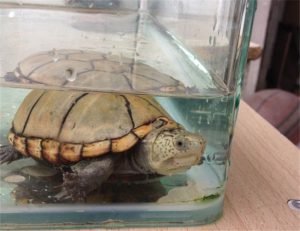
Kinosternon alamosae (Alamos Mud Turtle)
The Alamos mud turtle lives in aquatic-rich habitats and unique ponds, retreating into mud to aestivate during dry periods. In the wild it eats insects, small shrimp, and other invertebrates, and is a shy turtle that withdraws into its shell when threatened.

Pseudemys alabamensis (Alabama Red-bellied Turtle)
The Alabama red-bellied turtle is a small to medium aquatic turtle with a carapace 35–45 cm long. Hatchlings are vividly colored, but in the wild adults become dull and grayish-black; captive-bred individuals can retain their bright coloration.
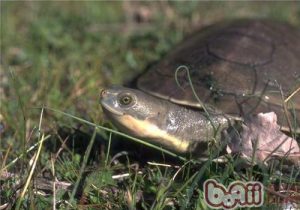
Emydura australis (Australian Big-headed Turtle)
The Australian big-headed side-necked turtle is carnivorous and lives in shallow water, aestivating in pond mud during the dry season. In the wild it consumes large numbers of mosquito larvae, making it beneficial to people, though it is rare and its trade is strictly controlled.