Search Results
11 results for “escape parrot”

Eight Key Care Points for Pet Parrots
Eight care points keep a pet parrot healthy: disinfect the cage and perches often and keep them dry, avoid dirty or unsuitable food, prepare the diet without oil or seasoning and cool cooked food to room temperature, wash fruit and vegetables in a salt-and-lemon soak, hold a steady aviary temperature, clip wings sensibly to prevent escape, guard against heat (over 37°C can be fatal), and train regular, timed feeding.
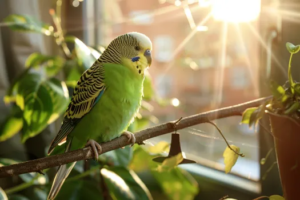
How to Catch a Parrot Safely
Catching a budgerigar is sometimes necessary — returning an escaped bird or applying skin medication — but doing it wrong can suffocate or injure it. Win the bird's trust first so it steps onto your hand, and if you must grab it, cup the back and loosely circle the neck with a finger to control pressure. Never scare it or grab its feathers, wings, or feet.
Four Parrot Species Most Likely to Fly Away from Home
Parrots crave freedom. Keepers know they try to escape by prying the cage door with their beaks. Once out, you likely lose them forever, as most cannot find their way home. Our team introduces a few escape-prone species and how to prevent it.

What Different Parrot Biting Behaviors Mean
Parrot biting has many meanings—besides calling and eating, the beak defends, attacks, explores, and plays, so the meaning is complex. Our team details biting from various causes.
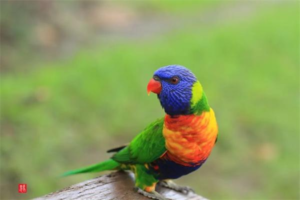
How to Clip a Parrot’s Flight Feathers Safely
Clipping a parrot's flight feathers lets it fly safely in a small space without escaping—protecting both bird and owner while preserving some flight ability. It is a skill that needs patience and practice to avoid injury. The key is to trim only the outer flight feathers (never the down feathers or blood-filled shafts), keep both wings symmetrical, and cut about half to two-thirds at a 90-degree angle. Done calmly on a relaxed, well-fed bird and finished with a gentle antiseptic, feather clipping is a safe, optional management tool.
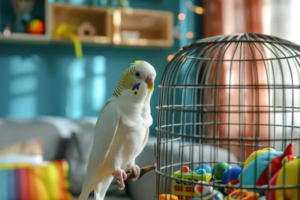
How to Care for a Lovebird
Use a sturdy metal cage (not wood - they chew and may escape), line the bottom with shavings or sand, and feed a balanced pelleted diet plus grains, fruit, and vegetables (avoid avocado and sugary or fatty human food). Feed by age - newborns every 1-2h, adults once daily - and change food and water daily. Give cooled boiled water in a shallow dish and keep them cool.

Rosy-faced Lovebird
The Rosy-faced Lovebird is easily recognized by its head color, very similar to a peach. In the wild it often damages farmers' hard-grown crops, so it is driven away by local farmers.

Black-cheeked Lovebird
The Black-cheeked Lovebird (Black-cheeked Lovebird), also called the Black-cheeked Lovebird or Black-masked Lovebird, derives from the Greek 'Agape' meaning love and 'Ornis' meaning bird, hence 'lovebird'. Its plumage is very brilliant, and heavy capture for the pet trade has reduced wild numbers.
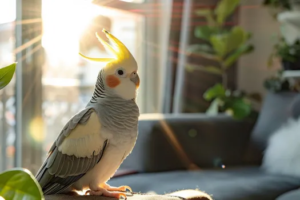
How to Feed a Budgerigar at Every Life Stage
Budgerigars are social, intelligent birds, but their care changes with age. Chicks are the most fragile stage and need frequent hand-feeding with a quality parrot formula and parrot hand-feeding powder, offered in small amounts every few hours around the clock. Adults need a varied diet of grains, vegetables, fruit, and seeds plus a protein boost from boiled egg, formulated protein feed, mealworms, or beans. Through every stage, keep the cage at a comfortable 20-25 C, maintain clean food and water dishes, and allow safe supervised flight time. With the right food and routine, a budgie stays active and healthy.

Beaked Cape Tortoise
The Beaked Cape Tortoise (Homopus areolatus), or parrot-beaked tortoise, is the world's smallest tortoise, a secretive rock-dweller endemic to South Africa's Cape. Delicate in captivity, it is best left to experts.