Search Results
603 results for “ear scratching”

How to Improve Your Cat’s Happiness
A cat's happiness rests on four pillars: balanced nutrition, a safe and stimulating home, regular interaction, and consistent preventative healthcare. Feeding scheduled meals, providing hiding spots and toys, playing 10 to 15 minutes a day, and keeping up with vaccines, deworming, and dental care together build a contented, healthy cat.

Why Do Cats Roll on the Floor?
A cat rolling on the ground can mean play, happiness, self-grooming, a bid for attention, stress relief, or itchy skin from parasites. Context matters: if the rolling is paired with scratching or skin irritation, check for fleas and treat promptly; if it is purely attention-seeking, more interaction solves it.

Common Bad Habits in Cats and How to Fix Them
Common cat bad habits include biting, picky eating, and disturbing the owner's sleep. Many of these habits form because of the owner's own behavior — playing with hands or giving snacks without limit. Learning the right way to raise a cat is the best way to prevent them.
Cat Ringworm and Stubborn Skin Issues: How to Choose Treatment
Ringworm (dermatophytosis, often Microsporum canis) is famously stubborn and recurrence-prone, and the usual reason is that a surface-only spray never reaches the fungi hiding in the dermis—so it looks better for a day or two, then flares again. Human products can also irritate cat skin. The practical rule is to match the treatment to severity: a broad-spectrum antiseptic spray for early mild spots, a terbinafine spray for a confirmed simple fungal infection, and a ketoconazole-plus-metronidazole ointment when the lesion is ulcerated, smelly, and mixed with bacteria. This article explains why ringworm recurs, how to pick by stage, and the cautions (licensed products, environmental cleaning) that actually stop it coming back.

Why Does Cat Fur Become Matted and Hard?
Matted, hardened fur is a common and frustrating problem for many cat owners, and it can seriously affect a cat's comfort and appearance. The issue usually stems from poor grooming habits, an unbalanced diet that lacks essential vitamins and protein, or underlying health problems such as skin infections, inflammation, or fungal disease. When fur is not brushed regularly, loose hairs tangle together and trap dirt, forming tight, stiff mats. In most cases the problem can be prevented and improved through daily brushing, a balanced diet, and routine professional grooming. However, if matting appears together with skin redness, hair loss, or other abnormal signs, a timely visit to the veterinarian is the safest approach.
Yes, Cats Get Jealous: 5 Signs to Watch For
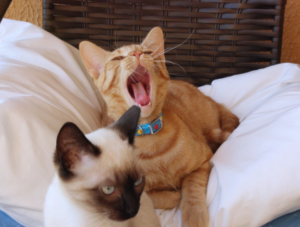
Cats may look aloof, but they do feel jealousy, rooted in a strong sense of ownership. When a new pet arrives or you focus on another animal, a cat may fixate on the "rival" while emitting a low growl. Some cats act out by spraying, destroying things, or fighting; others go quiet, hide, and refuse food. That withdrawal reflects sadness and anxiety, and if ignored it can harm health, lowering immunity, causing weight loss, or triggering feline idiopathic cystitis. The good news is that jealousy means your cat cares; more one-on-one time and a slow introduction of newcomers resolve most cases.

Why Is My Cat’s Skin Red and Swollen?
Red, swollen, itchy, or balding patches that your cat keeps scratching are often a sign of skin disease, and some types can spread to people, so take it seriously. Common causes include allergies, which usually appear symmetrically with intense itch from food, pollen, dust mites, or contact with irritants; infections that enter through small scratches, such as bacteria causing hot, painful, pus-filled spots, fungi causing round hairless red rings that may glow green under a Wood's lamp and can infect humans, or parasites like mange and ear mites; and rare autoimmune issues like pemphigus or lupus that bring symmetric blisters and general signs. Before seeing a vet, put on an Elizabethan collar to stop scratching, switch to a single-protein hypoallergenic diet, remove suspected allergens, and check with a Wood's lamp in the dark: green glow suggests fungus, treat with ketoconazole ointment, while no glow allows antibacterial ointments like zinc oxide, erythromycin, or mupirocin after clipping, rinsing with saline, and disinfecting with iodine. For severe itch, chlorpheniramine can help. If it worsens or brings other symptoms, see a vet for tests, and add B vitamins and fish oil for skin immunity.

Choosing the Right Skin Spray for Cat Fungal and Bacterial Dermatitis
Cat skin problems such as ringworm, allergic dermatitis, and mite infestations share overlapping signs—hair loss, itching, scaling—which makes guessing the right treatment risky. Using a product aimed at only one pathogen often fails when the real cause is different, leading to repeated flare-ups and irritated skin. A well-designed pet skin spray should offer broad-spectrum activity against both fungi and bacteria, penetrate the skin surface to reach deeper infection, and support barrier repair so problems stop recurring. This guide explains the main types of cat skin disease, why a penetrating broad-spectrum formula works better, the safety and ingredient features to look for, and why a veterinary diagnosis should come before you reach for any spray.
100 Essential Tips Every New Cat Owner Should Know
Bringing home a first kitten is exciting but daunting, and poor care can hurt both of you. These 100 essentials cover diet (life-stage food, toxic grapes/chocolate/onion/garlic, no bones or raw meat, fresh water), daily care (brushing, nail and ear cleaning, litter hygiene, n+1 boxes), health (vaccines at 8–12 weeks, deworming, normal temperature 38–39.2°C, spay/neuter, no human meds), behavior (slow blinks, tail talk, no punishment), and home safety (screens, hiding wires, toxic plants, no smoke). Read them once and you'll share a calmer, healthier life with your cat.

What to Do When Your Cat Loses an Entire Claw?
If your cat loses a whole claw, stay calm and watch for other symptoms while caring for the wound. A claw is made of keratin and sheds naturally over time, but a full loss usually comes from overzealous scratching on windows or furniture, an injury, or a claw disease such as an ulcer. If the claw has simply come off and there is a wound, rinse it with saline, disinfect with iodine, and apply an anti-inflammatory ointment three times a day to prevent infection and aid healing. Keep an Elizabethan collar on so the cat cannot lick the spot, and see a vet if infection or other signs appear. To lower the risk, fit window guards, trim claws regularly with proper pet clippers and technique, and keep up with grooming. Most claw losses are minor; calm observation and good wound care are usually enough.