Search Results
714 results for “dog weight gain”
Rabbit Sore Hock: Symptoms and Treatment
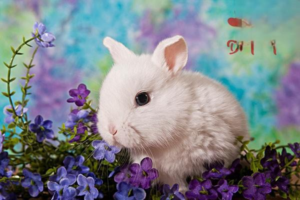
Sore hock (pododermatritis) is common in rabbits — high-rate and harmful though not instantly fatal. It starts as bald, swollen, shedding foot skin, then abscesses and bleeding ulcers that spread. Cause is rough cage floors plus urine soak; treat by trimming, disinfecting, and padding, and prevent with clean, smooth cages.
What happens after a Pomeranian is spayed or neutered?
After neutering, a Pomeranian mainly: stops going into heat (no marking, barking, roaming, poor appetite); females have lower risk of mammary tumors, ovarian cysts, pyometra, and longer life; metabolism drops so it may gain weight — reduce fat and protein; shortly after surgery it may be off food and lethargic from stress/pain.

Colorpoint Shorthair
The Colorpoint Shorthair was developed from the Siamese, with red or cream restricted to points (face, legs, ears, tail, and genitalia). Early crosses with domestic shorthairs, refined by concentrating Siamese genes with red, produced the final Colorpoint Shorthairs. Like many CFA breeds, it is a man-made breed. In the 1940s and 50s, breeders risked deciding the beautiful Siamese should come in more than traditional seal and the most common blue point.
TurkishVan
Turkish Van (details)

Turkish Angora
The Turkish Angora, named for Turkey's capital Ankara, is one of the oldest long-haired breeds, dating to the 16th century. Elegant with silky, medium-length coat and almond eyes, it is agile, independent, and famously fond of water. Once nearly supplanted by the Persian, it was revived in the US from 1963 and is now carefully bred to preserve its pure bloodline.

Siberian
The Siberian Forest Cat, shortened to Siberian Cat, has the earliest written records from the 11th century: it was a very common cat in Russian markets and Siberian villages. Living in a harsh country, it is covered in long fur with a thick ruff around the neck. Its outer guard hairs are hard, smooth, and oily, and its dense undercoat resists the Siberian cold.

Chartreux
The Chartreux, also called the Chartreux Blue Cat, has the English name Chartreux. Native to France, its history dates to the 14th century. Together with the British Shorthair Blue and the Russian Blue, it is one of the world's three great blue cats. The Chartreux has a long history, recorded in publications as early as 1558.

Somali
The Somali cat looks much like the Abyssinian—slender, slightly rounded, with big V-shaped ears and almond eyes—but with a semi-long, soft, dense coat. Developed in the US and Canada from a spontaneous long-haired mutation of the Abyssinian, the Somali is intelligent, gentle, playful, and water-loving, though its abundant coat needs regular grooming.

Canadian Hairless
The Canadian Hairless, also called the Sphynx, is an extremely rare hairless genetic variant that appeared during the breeding of American or European domestic cats. Although it shares the skin pigment of domestic cats, its skin bears only a few hairs. With a wedge-shaped body, large ears, and a bulky frame, its head looks like Yoda's. The whole look makes it seem not cute but rather frightening compared with domestic cats.

Korat
The Korat cat, also called the Korat or Si-Sawat, originates from the Khorat Plateau in northwest Thailand and is an ancient breed. Introduced to the US in 1959 and recognized by American cat lovers in 1965, and by Britain 10 years later. Its coat, like the Russian Blue and Chartreux, is solid blue with no shading or pattern, with a silvery sheen, and it has a unique heart-shaped face.