Search Results
730 results for “dog red eyes”
How do I pick a high-quality Doberman Pinscher?
Here are some suggestions for choosing a quality Doberman: First, if you want a purebred, buy from a reputable pet store or breeder and make sure the dog has a pedigree certificate and matches the breed's characteristics and standards. Second, when choosing, observe the dog's physical condition, including the coat, skin, eyes, ears, nose, and mouth for health problems.
My puppy suddenly has no strength to walk, weak limbs, staggers, cannot lift its head, and can barely open its mouth
This may be a nervous-system disease, middle-ear infection, stroke, or cervical spine pressing a nerve; see a vet promptly. Weak limbs, staggering, and head-down suggest vestibular dysfunction or neuritis (drooling, face tremor, skewed eyes); stroke also causes imbalance and lockjaw from reduced brain blood flow. Get CT/MRI and blood work early for better recovery.

Colorpoint Shorthair
The Colorpoint Shorthair was developed from the Siamese, with red or cream restricted to points (face, legs, ears, tail, and genitalia). Early crosses with domestic shorthairs, refined by concentrating Siamese genes with red, produced the final Colorpoint Shorthairs. Like many CFA breeds, it is a man-made breed. In the 1940s and 50s, breeders risked deciding the beautiful Siamese should come in more than traditional seal and the most common blue point.

Cymric
The Cymric, English name Cymric, is also called the Longhaired Manx or Longhaired Isle of Man cat. From its alias we know it is a longhaired cat; though long-haired, it's not hard to groom. Its most striking feature is having no tail, drawing immediate attention.
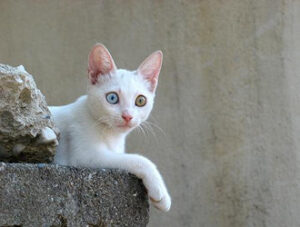
TurkishVan
Turkish Van (details)

Turkish Angora
The Turkish Angora, named for Turkey's capital Ankara, is one of the oldest long-haired breeds, dating to the 16th century. Elegant with silky, medium-length coat and almond eyes, it is agile, independent, and famously fond of water. Once nearly supplanted by the Persian, it was revived in the US from 1963 and is now carefully bred to preserve its pure bloodline.

Siberian
The Siberian Forest Cat, shortened to Siberian Cat, has the earliest written records from the 11th century: it was a very common cat in Russian markets and Siberian villages. Living in a harsh country, it is covered in long fur with a thick ruff around the neck. Its outer guard hairs are hard, smooth, and oily, and its dense undercoat resists the Siberian cold.
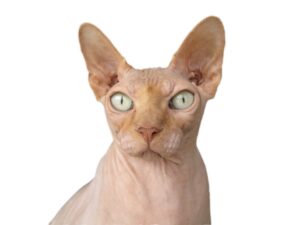
Sphynx
Sphynx (details)

Selkirk Rex
The Selkirk Rex, English name Selkirk Rex, is one of the newest natural breeds, evolved from domestic cats. First from Wyoming, USA, cross-bred with Persians to develop its traits, it can be crossed with Persians, Exotic Shorthairs, British and American Shorthairs. Free of genetic diseases, it is a very healthy cat distinguished by its fully curly coat—even the whiskers curl.

Chartreux
The Chartreux, also called the Chartreux Blue Cat, has the English name Chartreux. Native to France, its history dates to the 14th century. Together with the British Shorthair Blue and the Russian Blue, it is one of the world's three great blue cats. The Chartreux has a long history, recorded in publications as early as 1558.