Search Results
106 results for “dog name”

Why Do Dogs Get Cavities?
The most common causes of dog cavities are poor diet and poor dental cleaning, with age and genetics also raising risk. Once found, a decayed tooth is usually extracted so it does not harm neighboring teeth, though mild cases may be filled and elderly dogs may keep the tooth if anesthesia is risky; follow your vet's advice. Prevention is key: healthy food, regular brushing, and routine dental checks keep the mouth sound.
Safe Dog CoQ10: What the Research and Labels Tell You
CoQ10 appears in veterinary cardiac plans for mitral valve disease, dilated cardiomyopathy, and senior heart decline, and the research behind it is real — not a fad. A 2021 study found dogs with mitral valve disease in heart failure had significantly less heart-muscle CoQ10 than healthy dogs, and a 2022 randomized trial showed supplementation improved oxidative-stress and contraction markers with no adverse effects. The catch is that the benefit only appears when the product is safe, dog-appropriate, and correctly dosed. This guide explains how to read the label and the form.

The Dangers of Dental Tartar in Dogs
Dog tartar is hard buildup of bacteria and food debris along the gumline. Left alone it drives gingivitis, bad breath, loose or lost teeth, mouth infection, periodontal disease, respiratory infection, and even whole-body issues like heart, kidney, and diabetes risk. Prevention means regular brushing, dry food over wet, and limiting sugar and starch. Severe cases need a professional dental cleaning, and badly loose teeth may require extraction.
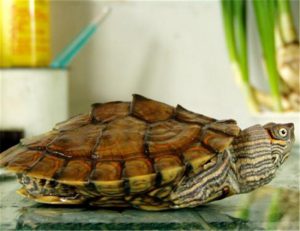
Graptemys pseudogeographica (False Map Turtle)
The false map turtle is a map turtle that is less commonly kept than sliders, needing clean water and a quiet environment. It is omnivorous but especially loves shrimp, and is distinguished by bright yellow markings behind the eyes.

Interdigital Cysts in Dogs and Cats: Symptoms, Treatment, and Prevention
Interdigital cysts (interdigital furunculosis) are a chronic inflammatory skin condition of the paws, not true cysts, starting as small papules between the toes that enlarge, suppurate, and form nodules causing pain, lameness, and licking. Antibacterial care controls it; stubborn cases need surgical removal of the web.

Torticollis in Dogs and Cats: Symptoms, Treatment, and Prevention
Torticollis is a head tilt or twist from neck-muscle spasm or paralysis, cervical rheumatism, vertebral dislocation or fracture, neuritis, or ligament injury - often after a fall, blow, or tight collar. Ear infection can also cause it. Treatment targets the underlying cause, with rest, pain relief, and, for fractures, cervical stabilization.

Hip Dislocation in Dogs and Cats: Symptoms, Treatment, and Prevention
Hip dislocation is separation of the femoral head from the hip socket, usually from trauma such as a car accident, a fall, or a forceful pull on the hind limb. It causes a shortened, rotated leg and a hopping or dragging gait; it is corrected by closed or surgical reduction and strict rest, since it tends to recur.

Eosinophilic Myositis in Dogs
Eosinophilic myositis is a recurrent inflammation of the chewing muscles in dogs (often young herding breeds), marked by sudden swelling, eye protrusion, and trouble opening the mouth. It is likely allergic or autoimmune. Anti-allergy and anti-inflammatory care, plus feeding support, are key.

Chorea (Involuntary Movement Disorder) in Dogs and Cats
Chorea is a neurological movement disorder in dogs and cats in which muscle groups twitch or jerk involuntarily, producing a dancing, uncoordinated gait. It usually stems from encephalitis linked to distemper, carbon-monoxide poisoning, tumors, or other brain disease, and treatment targets the underlying cause.
What’s the difference between a Teddy dog and a Poodle?
The Teddy dog and the Poodle are the same breed — they differ only in grooming. A 'Teddy' is simply a smaller Poodle clipped into a teddy-bear style; it's still a Poodle. The Poodle is the actual breed; 'Teddy dog' names a haircut.