Search Results
85 results for “dog name”
How Long Until a Dog Recognizes Its Owner
As a dog develops, its brain matures and its view of the world grows. By about six months it settles on who its owner is, so build the bond through training before then, the earlier and longer the better. Four steps help: a name, close interaction, fixed routines, and a designated toilet spot.
Are Dog Treats a Blessing or a Poison?
Treats come in many types. Meat jerky (chicken/duck/beef, dry or moist) suits most dogs—buy branded, dated, labeled ones. Functional treats include dental biscuits and chews (rawhide, pork/beef skin, plant protein) that clean teeth and pass time; size to the dog to avoid swallowing. Dairy treats need lactose-free choices for lactose-intolerant dogs. Natural chews (bones, rabbit ears) are popular but unpreserved, so buy small. Pick known brands with clear labels, check dates, and remember: staple food sustains alone; treats alone do not—and too many treats breed pickiness.
Why Is the Fur on My Dog’s Nose Bald?
Bald patches on a dog's nose can come from dry skin, over-licking, or simple rubbing during play, but if you also see flakes, red spots, scabs or inflammation, a skin disease is likely. First rule out health problems with a check-up. If the skin looks normal, use a moisturizer or a little edible oil, keep the area clean and dry, and stop excess licking. Severe or persistent cases need a vet.

Why Do Dogs Get Cavities?
The most common causes of dog cavities are poor diet and poor dental cleaning, with age and genetics also raising risk. Once found, a decayed tooth is usually extracted so it does not harm neighboring teeth, though mild cases may be filled and elderly dogs may keep the tooth if anesthesia is risky; follow your vet's advice. Prevention is key: healthy food, regular brushing, and routine dental checks keep the mouth sound.
Safe Dog CoQ10: What the Research and Labels Tell You
CoQ10 appears in veterinary cardiac plans for mitral valve disease, dilated cardiomyopathy, and senior heart decline, and the research behind it is real — not a fad. A 2021 study found dogs with mitral valve disease in heart failure had significantly less heart-muscle CoQ10 than healthy dogs, and a 2022 randomized trial showed supplementation improved oxidative-stress and contraction markers with no adverse effects. The catch is that the benefit only appears when the product is safe, dog-appropriate, and correctly dosed. This guide explains how to read the label and the form.

The Dangers of Dental Tartar in Dogs
Dog tartar is hard buildup of bacteria and food debris along the gumline. Left alone it drives gingivitis, bad breath, loose or lost teeth, mouth infection, periodontal disease, respiratory infection, and even whole-body issues like heart, kidney, and diabetes risk. Prevention means regular brushing, dry food over wet, and limiting sugar and starch. Severe cases need a professional dental cleaning, and badly loose teeth may require extraction.
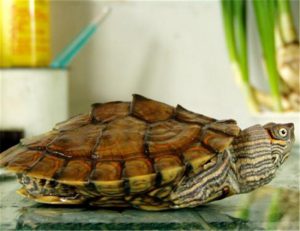
Graptemys pseudogeographica (False Map Turtle)
The false map turtle is a map turtle that is less commonly kept than sliders, needing clean water and a quiet environment. It is omnivorous but especially loves shrimp, and is distinguished by bright yellow markings behind the eyes.

Interdigital Cysts in Dogs and Cats: Symptoms, Treatment, and Prevention
Interdigital cysts (interdigital furunculosis) are a chronic inflammatory skin condition of the paws, not true cysts, starting as small papules between the toes that enlarge, suppurate, and form nodules causing pain, lameness, and licking. Antibacterial care controls it; stubborn cases need surgical removal of the web.

Torticollis in Dogs and Cats: Symptoms, Treatment, and Prevention
Torticollis is a head tilt or twist from neck-muscle spasm or paralysis, cervical rheumatism, vertebral dislocation or fracture, neuritis, or ligament injury - often after a fall, blow, or tight collar. Ear infection can also cause it. Treatment targets the underlying cause, with rest, pain relief, and, for fractures, cervical stabilization.

Hip Dislocation in Dogs and Cats: Symptoms, Treatment, and Prevention
Hip dislocation is separation of the femoral head from the hip socket, usually from trauma such as a car accident, a fall, or a forceful pull on the hind limb. It causes a shortened, rotated leg and a hopping or dragging gait; it is corrected by closed or surgical reduction and strict rest, since it tends to recur.