Search Results
106 results for “dog follicles”
Is Your Dog Always Tearful? Watch Out for Ingrown Eyelashes
An ingrown eyelash (distichiasis) curves inward and constantly rubs the cornea and conjunctiva. It's common in flat-faced breeds (Pekingese, Pug, Bulldog), long-haired breeds (Maltese, Shih Tzu), and seniors, causing chronic tearing, tear stains, conjunctivitis, keratitis, and even corneal perforation and vision loss. A few lashes can be plucked; many need electrolysis, cryotherapy, or entropion surgery.

How Long for a Dog’s Shaved Fur to Grow Back?
Without follicle damage, a dog's shaved fur usually returns within a month (about 1–2 cm), faster for short-haired breeds and slower for long-haired ones; health, nutrition, and environment also matter. Speed regrowth with protein-rich food, fish oil, dry skin, sun avoidance, exercise, and don't shave too often or you'll damage follicles.

Can Dogs Go Bald? Understanding Localized Hair Loss
Dogs don't go bald from genetics like people do; their "bald spot" is localized hair loss from salty food, lack of sunlight, over-bathing, follicle damage, poor nutrition, or fungal/mite/bacterial skin disease. Adjust diet and care, limit baths, ensure sunlight and parasite control, and see a vet for serious skin issues.

What Causes Dog Folliculitis?
Folliculitis can come from bacteria, parasites, fungi, allergies, hormone imbalance, a greasy diet, or a damp, polluted environment — alone or combined. Diagnosis needs the dog's history and exams. Prevent it with regular baths, brushing, allergy control, good immunity, and a light, balanced diet.

How to Treat Dog Folliculitis
Dog folliculitis starts with clogged follicles and secondary bacterial infection; treatment aims to kill bacteria, soothe inflammation, and keep the area clean and dry. Disinfect the spot and apply an antibiotic ointment (e.g., erythromycin), or use oral/injected antibiotics for severe cases, plus a medicated bath and an Elizabethan collar. See a vet if it doesn't improve.

What Happens When You Shave a Dog in Summer?
A dog's coat blocks UV, insulates, and shields skin from bugs and debris; shaving it raises risks of sunburn, skin cancer, follicle damage, parasites, and cuts, and can hurt the dog's confidence and social ease. Unless medically needed, avoid full shaves — instead offer water, shade, cool timing, and light trimming (keep the outer coat).

Why Does Your Dog Have More Dandruff
Increased dandruff in dogs has many possible causes: dry climate, over-bathing or harsh products, low fat intake, poor nutrition, too much dietary salt, or an underlying skin condition. The right response depends on the trigger. In dry weather, add water and a soothing moisturizer; with a skin disease, a proper diagnosis and treatment are needed. Because the skin reflects overall health, identifying the root cause is the key to relieving flaky, itchy skin and keeping the coat healthy.

How to Choose a Skin Spray for Your Dog
Skin problems flare up in warm, humid weather, and a good skin spray is one of the most practical items for a dog first-aid kit. Rather than chasing the cheapest or most advertised product, owners should judge a spray on ingredient safety, the right target for the infection, and the maker's track record. This guide explains when a spray helps, what to look for on the label, and the daily habits—dry bedding, clean toys, avoided puddles—that do more to stop recurrence than any bottle. Sprays are for mild care and prevention, not severe disease.
How Often Should You Bathe Your Dog in Summer?
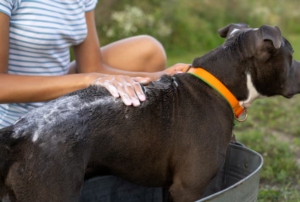
Bathing your dog once a week is usually too often. A dog's skin relies on its sebum layer to stay moist and protected; over-bathing strips it, causing dryness, worse odor, and skin infections. Frequency should follow coat type and lifestyle—indoor small dogs may need only every two to three weeks, while active outdoor dogs can go weekly. Between baths, wipes, toothbrushing, and ear care keep odor down.

Why does my dog have black spots on its skin?
Black spots on a dog's skin are usually harmless — they often appear with age as normal pigment deposits (age spots) from metabolic changes. They can also follow a skin infection that damaged the hair follicles, in which case the marks typically fade over time, or result from sunburn in short-coated dogs that spend a lot of time outdoors.