Search Results
77 results for “dissolved oxygen”
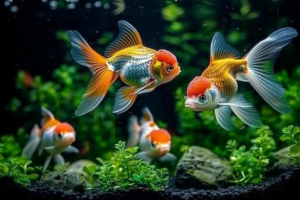
Golden Arowana Care and Husbandry
The golden arowana is a large, striking ornamental fish that needs generous space—a pond or an aquarium over 120 cm long. It prefers soft, slightly acidic water and a steady 24–26°C (28–30°C for silver and black varieties), with new and old water kept within 2°C to avoid shock. Good filtration, an air pump for oxygen, and a covered tank prevent stress and disease. Aim for 3–4 hours of sunlight daily, or 5–7 hours of full-spectrum lighting, to support growth and color. Sound husbandry—clean water, stable temperature, sensible feeding—is the best defense against the common signs of illness: dull color, sluggish swimming, and drooping eyes.
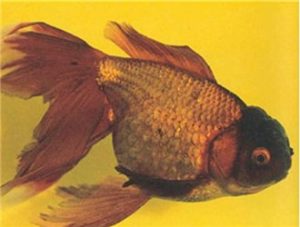
Brown Oranda with Curled Opercula
In goldfish, curled opercula is usually a disease sign, but the Brown Oranda with Curled Opercula has gill covers that grow everted from inside out like a wound - a hereditary variation.

Glowing-scale Butterfly-tail Goldfish
The Glowing-scale Butterfly-tail Goldfish is a goldfish variety whose special coloration interweaves black, white, and red patches like a Chinese ink painting, earning it the nickname 'landscape-painting butterfly tail'.
Silver Celestial Eye Goldfish
The Silver Celestial Eye Goldfish is a variety of Dragon-back goldfish whose eyeballs protrude from the sockets and turn upward and forward toward the sky, hence the name sky-gazing eye. It is a relatively rare goldfish variety.

Wuhan Lion Cat
The Wuhan Lion Cat is a goldfish variety with a short, round body whose eyes and mouth are covered by developed head growths, so it is prone to 'head-droop'. It belongs to the Lionhead type.

Calico Long-tailed Comet Goldfish
The Calico Long-tailed Comet Goldfish is a variety of goldfish belonging to the comet (grass) type. It shares the habits of goldfish, but its distinctive shape and coloration are loved by aquarists.

Celestial Eye Goldfish
The Celestial Eye Goldfish is a variety of goldfish whose name reflects its most obvious trait: when viewed from above, you can clearly see its upturned eyes. Newly hatched fry actually have normal eyes; the change begins only about one to two months after hatching.

Iron-wrapped Gold Wen Pompon
The Iron-wrapped Gold Wen Pompon is a variety of goldfish and shares the same habits as goldfish. Its coloration arises from a mutation during the color change of the blue-black Wen Pompon, so the color is very hard to stabilize.

Four Pompon
The Four Pompon is a variety of goldfish with the classic Wen-style body shape. Its most distinctive feature is four enlarged, fluffy nasal pompons that set it apart from other goldfish. It shares the same general habits as common goldfish and is relatively easy to keep.

Rose Red Dragon-eye with Tiger-head
The rose red tiger-head dragon-eye is a goldfish variety, so its care and habits are much like other goldfish. It has a very gentle temperament and weak territoriality, and can be mixed with other equally mild ornamental fish.