Search Results
2728 results for “coat color”

Feral vs. Stray Cat: How to Tell Them Apart
Many people mix up feral and stray cats, but they differ in history, behavior, looks, bond with people, and adaptability. A stray was once a pet, abandoned or lost, and lives near homes and people, so it often trusts humans and approaches for food. A feral cat was born and raised wild with little human contact, stays far from neighborhoods, hunts on its own, and is wary or aggressive toward people. Appearance alone is unreliable, both can look thin with rough coats, but strays may seem more eager to return to a home. Because ferals are hard to tame and can be aggressive, approach or adopt them with caution.

What’s the Difference Between American and British Shorthair Cats?
The two differ a lot: the American (AmSh) has a larger, rounder face and body, while the British (BrSh) has a finer, smaller face. AmSh comes in fewer colors; BrSh in many (silver/golden shaded, pointed, solid). BrSh is calm, lazy, quiet, and clingy; AmSh is lively, curious, and hardy. BrSh is picky about food quality; AmSh eats readily and is easygoing.

What’s the Difference Between Calico and Tortoiseshell Cats?
Calico and tortoiseshell cats may look alike at a glance, but they differ in how their black, orange, and white fur is distributed, their fertility, and their temperament. Calicoes show large, clearly separated color patches and are almost always female, while tortoiseshells have blended, mottled coats and fertile males do occur.
Thinking of Getting a Pomeranian? Read This First
Pomeranians are smart and quick to learn, but naturally alert and barky, so they need early socialization; they also bond intensely and can develop separation anxiety without alone-time training. Common issues include tear stains, heart disease, patella luxation, and skin problems — watch health closely and keep vaccines and deworming on schedule.
What are the differences between East and West German Shepherds?
East German Shepherds are more active and work-oriented with grey-black coats, while West German Shepherds are calmer, show-focused, and black-red or black-brown. West German lines generally make better family companions.
Meet the Siamese Cat: A 3-Minute Guide
The Siamese is an ancient palace cat from 14th-century Thailand (then Siam), weighing 8–14 lb for males and 6–10 lb for females, with pointed colors like seal, blue, lilac, chocolate, red, and cream. Its signature trait is temperature-sensitive fur: tyrosinase works faster when cold, so winter deepens the coat and age darkens it. Siamese are dog-like — clingy, energetic, curious, and talkative — and adapt well, making them a good choice for first-time owners.

Lionhead Rabbit: Appearance and How to Choose One
The Lionhead rabbit is small but round, with a plump body and a distinctive mane of long fur around the neck that forms a V shape like a tiny lion. Picking a healthy individual is the key to successful keeping. Avoid unweaned or very young rabbits, which are fragile and harder to raise; beginners should choose one over two months old. Knowing the breed's looks and common ailments helps you select a vigorous pet and care for it well.

Why Does Sunlight Help Dogs Absorb Calcium?
Strictly speaking, sunlight does not supply calcium directly; it triggers vitamin D synthesis in the body, which then promotes calcium absorption. A dog's skin contains 7-dehydrocholesterol that ultraviolet light converts into active vitamin D3. After further metabolism, vitamin D3 helps the intestines absorb and use calcium. So letting a dog sunbathe appropriately is a simple way to support its calcium needs alongside a balanced diet.
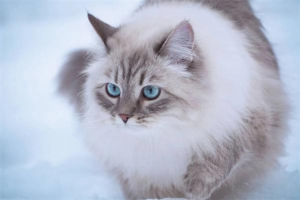
Cat Breeds with Beautiful Blue Eyes
A cat's eye color is set by its genes, and breeds carrying the dominant white gene most often have blue eyes. Several popular breeds share this striking feature, from the silky Balinese and friendly Birman to the plush Himalayan and elegant Persian. The blue-eyed Siamese and its relatives, the Ragdoll and Snowshoe, are favorites for their vivid gaze and gentle nature. If you are drawn to blue eyes, learn each breed's temperament and needs before choosing the one that fits your home.

White Chinchilla
The white chinchilla is a coat-color morph of the chinchilla (Chinchilla lanigera), native to the Andes of South America. It likes dry, cool, dim places, is nocturnal, gentle and very timid, and commands a higher price for its pure white coat.