Search Results
104 results for “cat vision”
Is a Cat’s Vision Good or Bad
A cat's visual sharpness is only about one-tenth of a human's - roughly 0.1-0.2, enough to make out objects around 10 meters away and blurry at that. The trade-off comes from the tapetum lucidum, a mirror-like layer that boosts dim light about 40 percent so cats see in one-sixth the light humans need, at the cost of clarity. Cats are nearsighted and built for the hunt: their best focus is about 75 cm, and they track moving prey (around 15-60 degrees per second, like a mouse) far better than still objects. They see blue-to-green but not red, and their wider 250-degree field of view beats our 200.
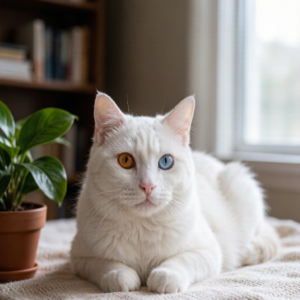
Does Heterochromia Affect a Cat’s Vision?
Heterochromia, or odd-eyed cats, does not affect vision, and these cats are usually striking. But most have a hearing defect: the ear on the blue-eyed side often has impaired hearing, a beautiful flaw. Because cats rely on hearing to move around, this can affect their actions. Owners should understand if an odd-eyed cat ignores them because it cannot hear, and should fit guards and supervise them. Their eyesight is normal; only their hearing differs, and it does not harm general health. Adopt with commitment, and never abandon them for it.
Why Are Cats So Good at Catching Mice?
Cats have a natural gift for catching mice, and it comes down to biology, instinct, and learned skill. As natural predators, they combine sharp hearing, a flexible body, retractable claws, and excellent night vision to track prey even in the dark. Their hunting instinct—inherited from wild ancestors—gives them quick reflexes and accurate judgment. Add powerful jaws and curved claws that pin a mouse instantly, plus a deep familiarity with rodent habits, and cats become formidable hunters. Even in modern homes, where catching mice is no longer necessary, that instinct survives—shown when a cat pounces on a toy or ambushes its owner in play.
Why Are Cats Afraid of Cucumbers?
Many cat owners are puzzled by the now-familiar sight of a cat leaping away from a cucumber placed nearby. This fear usually stems from a combination of instinct, vision, smell, and learned experience. Cats are naturally alert and cautious around sudden, unexpected objects, and a long green cucumber can trigger a strong startle response—some cats even mistake it for a snake. Their highly sensitive noses may also react to the vegetable's scent. A bad past encounter can create a lasting phobia. Understanding these triggers helps owners avoid deliberately scaring their cats, since such shocks can cause real stress and even illness.
Why Do Cats Have Difficult Labor?
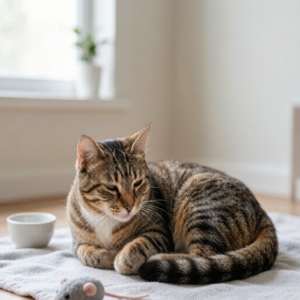
Dystocia in cats has many causes: existing health problems or illness during pregnancy, overly large kittens, abnormal positioning, or stress during delivery all raise the risk. Before birth, take steps such as a prenatal check to lower the risk and protect mother and kittens.
Choosing a Cat Dewormer: Why Combination Spot-Ons Suit Multi-Cat Homes
For mostly-indoor cats, a broad-spectrum, gentle combination spot-on is the most cost-effective and stress-free choice—and because most cats hate pills, a transdermal drop avoids force-feeding and the anxiety it causes, which is ideal for beginners and multi-cat households. Useful active types include imidacloprid-moxidectin (prevents a dozen-plus internal and external parasites and heartworm), fipronil-methoprene-eprinomectin-praziquantel (adds tapeworm and tick coverage for outdoor or raw-fed cats), and selamectin (very gentle from six weeks, pregnancy-friendly). In a multi-cat home the real work is operational: deworm all cats together, dose strictly by weight, use an Elizabethan collar and separation to stop licking, and avoid baths 48 hours around treatment. Above all, prevention beats treatment.
Can Cats Eat a Vegetarian Diet Long-Term?
A long-term vegetarian diet is not safe for cats and can seriously harm their health. Cats are obligate carnivores whose digestive systems are built to process meat, and they need nutrients—above all taurine—that only animal protein supplies. Without meat, cats develop nutritional imbalances, poor coats, weak immunity, diarrhea, and vomiting, plus shortages of vitamin A, D, calcium, and phosphorus that hurt vision and bones. For your cat's health, feed a science-based diet with enough animal protein.
Why Does My Cat Sleep with Its Eyes Open?
Seeing a cat doze with its eyes open is more common than you'd think, and it ties into how cats see, hunt, and bond. A cat's eyes capture fast movement through a special retinal structure, so even half-open it stays aware of its surroundings and can react instantly. In light sleep, the brain rests but the eye muscles stay on duty—a hunter's vigilance that lets a cat wake at the slightest sound. It may also be watching for you, feeling uneasy in a noisy room, or staying alert near feeding time. Occasionally, an eye injury or foreign object prevents normal closing. Open-eyed sleeping is normal in light sleep, but if an eye problem is the cause, see a vet.
Does Abdominal Fluid in Cats Always Mean FIP?
Fluid in a cat's abdomen, or ascites, is a sign—not a diagnosis. It can stem from liver or heart disease, kidney failure, malnutrition, or peritonitis caused by infection, viruses, or injury, and only one of those causes is feline infectious peritonitis (FIP). Because the symptom alone cannot confirm FIP, diagnosis needs bloodwork, imaging such as X-ray or ultrasound, and viral testing. If your cat shows a swollen belly, lethargy, fever, or breathing trouble, see a veterinarian promptly to find the real cause.
Why Cats Rarely Choke on Fish Bones
Cats do get caught by fish bones, but far less often than we might expect. Their tongue is covered with backward-facing papillae that act like little guards, stripping meat from bones and spitting out most spines; any small bones they swallow are smoothed and swallowed with the meat. The cat esophagus also has muscles for easy regurgitation, letting it vomit stubborn bones back up - and even carry food to kittens. Cats love fish because the ammonia smell from protein metabolism attracts them, and fish taurine supports the night vision they need as nocturnal hunters.