Search Results
131 results for “cat territorial”
Scarlet Macaw: Traits and Natural Behavior
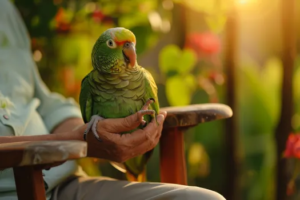
The scarlet macaw is among the most vividly colored parrots, with a body dominated by brilliant red and accented by yellow, white, and deep blue across the wings and tail. A large, strong black beak easily cracks hard nuts and fruit. These birds live in subtropical and tropical forests, roost high in big trees, and are highly social, gathering in flocks that can top thirty individuals. Understanding their size, diet, lifespan, and breeding needs is essential before taking one home.

What Dog Breeds Are Considered Dangerous or Aggressive?
Dangerous dogs are breeds known for strong aggression, high fighting drive, and difficulty being controlled. Examples include the Tibetan Mastiff, Dogo Argentino, American Pit Bull, Bull Terrier, Saint Bernard, Caucasian Shepherd, Croatian Sheepdog, and more. Because these dogs can threaten people and other animals, they are not recommended for densely populated urban areas, where an out-of-control dog could cause serious injury. Most dogs, however, are deeply loyal to their owners, and dangerous breeds are no exception. Owning one is possible, but only with dedicated, professional training to keep the dog under control. Without the patience and time such training demands, it is best to think carefully before bringing a powerful breed home.

Why Do Dogs Hate Delivery Couriers?
Many dog owners know the scene: whenever a delivery or takeout courier knocks, the family dog turns aggressive and may even attack the innocent visitor. Why does a knock at the door trigger such a loud, fierce reaction? The answer lies in a dog's territorial instinct. Before domestication, dogs strictly defended their territory, warning intruders by barking, then growling, then attacking. Early humans valued dogs precisely as living alarms. Today that instinct remains: when the courier knocks, the dog defends; when the courier leaves, the dog thinks it won. Next time the courier returns, the dog believes its earlier warning was too weak and escalates from bark to growl—and a perceived challenge can turn into a bite. To change this, reward calm behavior at the door with treats, teaching the dog that staying quiet near strangers earns a reward.

Popular Dog Breeds: Pros and Cons at a Glance
Choosing a dog means weighing temperament, exercise needs, grooming, and health risks against your lifestyle. From the gentle, trainable Golden and Lab to the stubborn, shedding Husky and Samoyed, and from compact Corgis and Pugs to tiny Bichons and Yorkies, every breed trades one challenge for another. There is no perfect dog—only the right match. Know the trade-offs before you commit.

Brown Surgeonfish
The Brown Surgeonfish, also known as the Algae-eating Surgeonfish or Lavender Tang, is a tropical marine fish named for its lavender-purple anal and caudal fins. Reaching up to 21 cm, it inhabits the Indo-Pacific and feeds mainly on algae.

Iron-wrapped Gold Wen Pompon
The Iron-wrapped Gold Wen Pompon is a variety of goldfish and shares the same habits as goldfish. Its coloration arises from a mutation during the color change of the blue-black Wen Pompon, so the color is very hard to stabilize.

Rose Red Dragon-eye with Tiger-head
The rose red tiger-head dragon-eye is a goldfish variety, so its care and habits are much like other goldfish. It has a very gentle temperament and weak territoriality, and can be mixed with other equally mild ornamental fish.
Black-banded Dwarf Cichlid
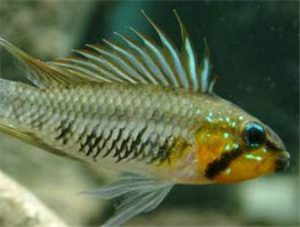
The Black-banded Dwarf Cichlid is mainly distributed at the confluence of the Rio Negro and the Amazon River in Brazil. It is a carnivorous ornamental fish with a gentle temperament and some territoriality, so care should be taken with tank mates, and plants should be added to the aquarium to give it a sense of security.

Texas Cichlid
The Texas Cichlid is a large, fierce carnivorous cichlid from Mexico and the Amazon, reaching 20-30 cm. Its gray body is covered with white, blue, and black spots. Strong and not hard to keep, it must not be mixed with small fish due to its aggression and territorial nature.

Electric Blue Prince Cichlid
At least five geographic variants of the Electric Blue Prince exist, all native to Lake Malawi in East Africa. With its gentle temperament and ease of keeping alongside other community fish, this mbuna cichlid enjoys consistently positive reviews among hobbyists.