Search Results
675 results for “cat comfortable”

Why Won’t a Newly Bought Parrot Eat or Drink?
It is common for a newly bought parrot to refuse food and water for a day or two — usually out of fear of its new surroundings and a sudden change in diet. Keep the environment calm, provide food and water, and cover the cage if it stays frantic; watch for ruffled feathers, lethargy, or diarrhea, which point to a sick bird.

What Does Arowana Drop-Eye Mean?
Drop-eye is a normal physiological phenomenon in arowana, common in fish kept in aquariums, and silver arowana are even more prone to it. Drop-eye does not affect health but seriously impacts appearance and reduces ornamental value. Keepers should take preventive measures. Our veterinarian mainly introduces the causes of arowana drop-eye to help with prevention.
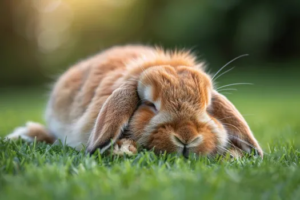
Why Does My Rabbit Have Cold Ears and No Appetite?
Cold ears in a rabbit usually mean its body temperature has dropped and it feels chilly — warm it up with a blanket and keep its environment at 18–24°C. If the ears are cold together with loss of appetite, an illness such as rabbit hemorrhagic disease, a cold or a serious condition may be lowering its temperature; watch for lethargy, sneezing, discharge or diarrhea and see a vet promptly.

Colorpoint Shorthair
The Colorpoint Shorthair was developed from the Siamese, with red or cream restricted to points (face, legs, ears, tail, and genitalia). Early crosses with domestic shorthairs, refined by concentrating Siamese genes with red, produced the final Colorpoint Shorthairs. Like many CFA breeds, it is a man-made breed. In the 1940s and 50s, breeders risked deciding the beautiful Siamese should come in more than traditional seal and the most common blue point.

British Shorthair
The British Shorthair is a compact, powerful, easygoing cat with a round face, dense short coat, and large round eyes. With a history tracing to Roman times, it became a recognized breed in 19th-century Britain and is beloved for its calm, friendly, adaptable nature—an ideal companion that gets along with everyone.

Russian Blue
The Russian Blue, also called Russian Blue, Archangel Blue, or Maltese cat, with English name Russian Blue, is known as the 'aristocrat of shorthairs' and 'elf of winter.' Originating in the 19th century, once only in Russia, now worldwide. Few in number globally; buying one costs at least tens of thousands. Cheap ones are hybrids.

Cornish Rex
The Cornish Rex, English name Cornish Rex, originates from England. Its ancestor is a non-purebred shorthair, dating to 1950, with a childlike, mischievous personality. The breeder mated the first kitten, Kallibunker, with its mother, producing more cats. This is the origin of the Cornish Rex breed.

Canadian Hairless
The Canadian Hairless, also called the Sphynx, is an extremely rare hairless genetic variant that appeared during the breeding of American or European domestic cats. Although it shares the skin pigment of domestic cats, its skin bears only a few hairs. With a wedge-shaped body, large ears, and a bulky frame, its head looks like Yoda's. The whole look makes it seem not cute but rather frightening compared with domestic cats.

Korat
The Korat cat, also called the Korat or Si-Sawat, originates from the Khorat Plateau in northwest Thailand and is an ancient breed. Introduced to the US in 1959 and recognized by American cat lovers in 1965, and by Britain 10 years later. Its coat, like the Russian Blue and Chartreux, is solid blue with no shading or pattern, with a silvery sheen, and it has a unique heart-shaped face.

European Burmese
The European Burmese is an elegant cat, but not a fragile one. It has a well-proportioned build, moderate muscle, and expressive eyes. Because it is very intelligent, affectionate, and loyal, it makes an excellent pet.