Search Results
581 results for “bathe cat”
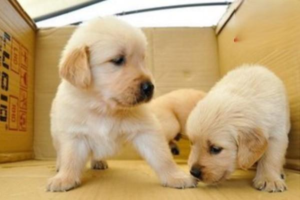
Can a Puppy With a Runny Nose Get Vaccinated?
Dogs showing any sign of illness—such as a runny nose, sneezing, vomiting, or diarrhea—should not be vaccinated, because live-attenuated vaccines can worsen an existing condition. Puppies need to be at least 45 days old for their first shot and about 3 months old for the rabies vaccine, with deworming spaced roughly a week apart. After vaccination, observe the dog for 30 minutes, avoid baths for 7 days, and confirm immunity with an antibody test around 15 days later.

Colorpoint Shorthair
The Colorpoint Shorthair was developed from the Siamese, with red or cream restricted to points (face, legs, ears, tail, and genitalia). Early crosses with domestic shorthairs, refined by concentrating Siamese genes with red, produced the final Colorpoint Shorthairs. Like many CFA breeds, it is a man-made breed. In the 1940s and 50s, breeders risked deciding the beautiful Siamese should come in more than traditional seal and the most common blue point.

Dragon Li
Dragon Li (details)

British Shorthair
The British Shorthair is a compact, powerful, easygoing cat with a round face, dense short coat, and large round eyes. With a history tracing to Roman times, it became a recognized breed in 19th-century Britain and is beloved for its calm, friendly, adaptable nature—an ideal companion that gets along with everyone.
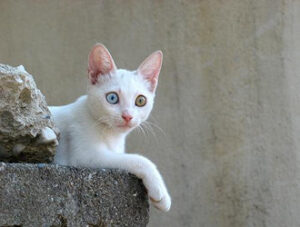
TurkishVan
Turkish Van (details)

Himalayan、Colourpoint Persians
The Persian is a widely known and popular breed; from its early crossbreeding emerged the Himalayan cat. The Persian's early evolution likely occurred on the cold Persian Plateau (today's Iran and Iraq). When Phoenicians and Romans brought these silky-longhaired cats to Europe, Europeans fell for them. Over the years, the Persian's long coat was deliberately retained and emphasized in breeding.

Chinchilla
The Chinchilla, with the English name Chinchilla, originates from Britain and descends from the Angora and the Persian. Some call it the artificial cat, hinting it was deliberately bred by humans. Notably, the Chinchilla was the first fully human-bred cat, appearing in 1894.

Canadian Hairless
The Canadian Hairless, also called the Sphynx, is an extremely rare hairless genetic variant that appeared during the breeding of American or European domestic cats. Although it shares the skin pigment of domestic cats, its skin bears only a few hairs. With a wedge-shaped body, large ears, and a bulky frame, its head looks like Yoda's. The whole look makes it seem not cute but rather frightening compared with domestic cats.

Korat
The Korat cat, also called the Korat or Si-Sawat, originates from the Khorat Plateau in northwest Thailand and is an ancient breed. Introduced to the US in 1959 and recognized by American cat lovers in 1965, and by Britain 10 years later. Its coat, like the Russian Blue and Chartreux, is solid blue with no shading or pattern, with a silvery sheen, and it has a unique heart-shaped face.

Japanese Bobtail
The Japanese Bobtail, also known as the Lucky Cat (Maneki-neko), is very popular in Japan. Cat lovers, upon hearing 'lucky,' want one. It is a native Japanese breed with a history tracing back centuries. Bred in the US after introduction, it is said an American cat lover in Japan found a cat with a short rabbit-like tail and brought several back after WWII; these are the ancestors. The Japanese Bobtail sits with one front paw raised, said to represent good fortune.