Search Results
219 results for “arowana”
How often should a golden arowana tank have a water change?
Golden arowanas need water changes every 3-7 days, depending on filtration. With a running filter, once a week suffices; without one, change every 3 days.

Why a Golden Arowana Bubbles at the Water Surface, and What to Do
A golden arowana blowing bubbles at the surface usually means low tank oxygen, poor water quality or wrong temperature, or simple indigestion. Fix low oxygen with a one-third water change and an air pump; keep temperature near 25°C and pH 6.5–7.0; for indigestion, fast the fish three days then feed easy foods like plants or cooked millet.

Arowana Lifespan and Why They Die Early
Wild arowana can live 30 years or more, but captive fish often die young at just 6 to 7 years because of weak breeding, over-emphasis on looks, poor water quality, and stress. Stable, well-filtered, slightly acidic water and a natural approach help them live longer.

How to Tell Male and Female Silver Arowana Apart
Tell silver arowana sex by body size (males larger), longer pointed pelvic fins, a rounder belly on egg-bearing females, a larger head on mouthbrooding males, and the gill 'A' mark (males have a longer, irregular arrow). Females spawn from age 6, laying 200-300 eggs per quarter; males mouthbrood the fry.

Silver Arowana Care Guide
Silver arowana are large fish needing a tank at least 150 x 50 x 70 cm with a lid, steady 24-29 C water at pH 6.5-7.5, and a mature filter. Feed small frequent meals of varied foods (no fatty organs, no spoiled food), fast on water-change days, and change 20-30% of the water slowly.

Common Causes and Fixes for Arowana Underbite (Dou Zui)
An arowana underbite (dou zui) is a lower jaw longer than the upper, like an underbite in humans, and hurts its looks. It is congenital (genetic, shows at 20-25 cm) or acquired from oversized food, a too-small tank, frights, or normal male mouthbrooding. Mild cases improve with a bigger tank, timed feeding, calm surroundings, and smaller varied food; severe cases are hard to reverse.

Common Causes and Remedies for Arowana Drop-Eye
Drop-eye in arowana is the downward displacement of the eye caused by excess orbital fat, mainly from uneven lighting, overfeeding, sinking feeds, and a tank set too high. It is cosmetic rather than life-threatening, but can be corrected by switching to floating feeds, balancing the light, cutting fat, wrapping the tank, or surgery in severe cases.

Arowana Feeding: Tips and Precautions
Arowanas are large, easy-going freshwater fish that need stage-based feeding: fry 6–8 small meals a day down to adults once a day, always to about 80% full and finished within 10 minutes. Use floating food to avoid droopy eye, cut shrimp rostra, disinfect live prey, and shift from growth-type to color-enhancing foods during the color phase.

Red Arowana: Morphology and Color-Enhancement Tips
The red arowana's most distinctive feature is the red patch on its gill cover; juveniles are silver with pink scale edges and turn golden-red as adults. Color develops in stages and responds to environment, temperature (26–30°C) and diet — astaxanthin and carotene help, while young chili-red arowanas should avoid color-enhancing foods until their green base deepens.
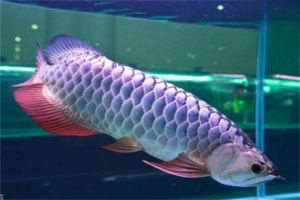
Silver Arowana: Morphology and Breeding Methods
The silver arowana is all silver, peaceful and easy to keep, but grows fast and can exceed 1 m, so it needs a spacious tank. It is a mouth-brooder: choose one healthy male (6–8 yrs, 50–60 cm) and one female (7–9 yrs, 40–50 cm), keep the tank absolutely quiet during spawning, and the male will carry 40–50 fertilized eggs in his mouth for about two months.