Search Results
66 results for “arowana disease”
Is It Normal for an Arowana to Lose Scales?
Some scale loss is normal as arowanas grow, but abnormal, frequent loss signals a problem—injury from handling, crashing into the glass (from overfeeding, fright, or fights), disease (fungal or parasite infection), or poor water. Prevent it with careful handling, a stable environment, separating fighters, and proper water changes.

Why Are My Golden Arowana’s Gills Red?
Red gills in a golden arowana often mean red-spot disease or gill rot, both from poor-water bacterial or parasite infection. Mild red-spot disease improves with water changes and warmer temperature; severe cases need chlorine-dioxide baths. Gill rot is contagious—isolate and treat with salt, copper sulfate, or trichlorfon by stage.

Why Does a Parrot Fish Have a White Film Over Its Eyes?
A white film over a parrot fish's eyes is usually cloud-eye disease, caused by poor water quality or injury letting bacteria in, excess nitrogen, or accompanying white-spot disease. Treatment depends on the cause: improve water and raise temperature for mild cases, add antibiotics and salt baths for infection, or treat the underlying white-spot disease.

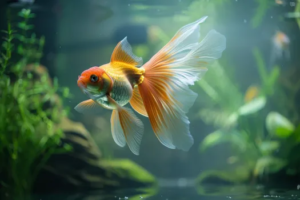
Best Goldfish Breeds for Beginners
Good beginner goldfish include comet, ryukin, black moor (dragon-eye), Thai lionhead, Chinese lionhead, and tigerhead — all vigorous and easy to keep, ideal for practice. Keeping them alive is easy; keeping them well takes effort: regular water changes, prompt cleanup of waste and leftover food, good water quality, and feeding to 70–80% full to avoid digestive upset.

Red Dragon Wrasse
The Red Dragon Wrasse (Bodianus scrofa) is a large, carnivorous ornamental fish named for its dragon-like shape and fiery red coloration. Widely kept as a feng shui fish, it is popular in Southeast Asia and can reach about 43 cm. It is easily startled, so a covered tank and stable water are essential.

Malayan Golden Arawana
The Malayan Golden Arawana (Crossback Golden Arowana) is a prized Asian arowana from the Malay Peninsula whose gold scale frames extend all the way up the back. A large, skittish carnivorous fish, it needs a quiet, covered tank over 120 cm long and a meaty diet of live foods.
- « Previous
- 1
- …
- 5
- 6
- 7