Search Results
98 results for “antifungal”
How to Choose a Skin Spray for Your Dog
Skin problems flare up in warm, humid weather, and a good skin spray is one of the most practical items for a dog first-aid kit. Rather than chasing the cheapest or most advertised product, owners should judge a spray on ingredient safety, the right target for the infection, and the maker's track record. This guide explains when a spray helps, what to look for on the label, and the daily habits—dry bedding, clean toys, avoided puddles—that do more to stop recurrence than any bottle. Sprays are for mild care and prevention, not severe disease.
Cat Ringworm and Stubborn Skin Issues: How to Choose Treatment
Ringworm (dermatophytosis, often Microsporum canis) is famously stubborn and recurrence-prone, and the usual reason is that a surface-only spray never reaches the fungi hiding in the dermis—so it looks better for a day or two, then flares again. Human products can also irritate cat skin. The practical rule is to match the treatment to severity: a broad-spectrum antiseptic spray for early mild spots, a terbinafine spray for a confirmed simple fungal infection, and a ketoconazole-plus-metronidazole ointment when the lesion is ulcerated, smelly, and mixed with bacteria. This article explains why ringworm recurs, how to pick by stage, and the cautions (licensed products, environmental cleaning) that actually stop it coming back.
A Cat Ringworm Case: Diagnosis and Treatment
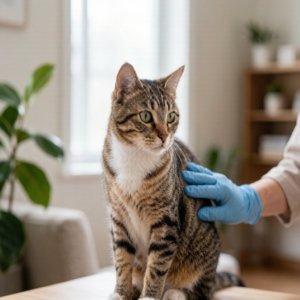
A 5-month Ragdoll with an oval bald patch, scales, and mild crusting on the neck turned out to be ringworm—confirmed by a Wood's lamp and typical signs. Treated with fur-clipping, cleaning, an antifungal spray and ointment, vitamin B, and an E-collar, he improved within a week. The case shows why vet confirmation and full-course treatment matter.
Is Terbinafine Spray Effective for Cat Ringworm?
Terbinafine spray is a first-line antifungal and does help mild, surface ringworm—but it can't reach deep follicles, so it won't cure every case and shouldn't be used long-term. For larger or deep infections, combine it with medicated baths and oral antifungals under veterinary guidance. Clip, disinfect, and protect the skin, and always confirm the diagnosis first.
Treating Cat Ear Mites: Cleansers, Medicine, and the Full Protocol
When a cat scratches its ears and shakes its head with dark waxy discharge, ear mites are the likely cause. A cleanser alone only removes debris—it does not kill the mites. Real recovery needs cleaning plus a miticide and a deworming spot-on, done in three rounds. Here is the full, safe protocol and what to look for in an ear cleanser.
Common Cat Eyelid Diseases and How They Are Treated
Cats are relatively less prone to eyelid problems than some other pets, but when an eyelid condition does appear it can affect both eye health and overall comfort. The eyelid is built from four layers (conjunctiva, tarsus, muscle, and skin) and carries the glands that keep the tear film healthy. Knowing the common disorders and how they are managed helps you spot trouble early.
Common Skin Problems in Dogs During Summer
If your dog is scratching more than usual, the cause may be the skin itself - parasites, allergies or underlying disease. Summer brings a spike in canine skin conditions, so every owner should know the common ones. This guide lists allergic dermatitis, yeast infection, folliculitis, impetigo, seborrhea, ringworm, mange, fleas, ticks, lupus and more, with their hallmark signs. Most skin diseases develop over time, so early detection and prompt veterinary care keep them stable and curable - watch your dog's behavior and act on anything unusual.
What to Do When Your Cat Gets Ringworm
Ringworm is a common skin problem in cats, especially in newly adopted kittens, and while not deadly it is stubborn: mild cases clear in two to three weeks, but it can linger and relapse for three to four months. About 98 percent of cat ringworm is caused by the fungus Microsporum canis, which shows as round patches that shed hair and crust, itches, and spreads as spores travel. Because it can pass to people, control means antifungal medicine, immune support, thorough disinfection, sunlight, isolation from other cats, and care to avoid human infection.
Ringworm in Cats and Dogs: Symptoms and Treatment
Ringworm, or dermatophytosis, is one of the most common skin diseases in pets, caused mainly by Microsporum canis, M. gypseum, and Trichophyton mentagrophytes. It matters for public health because most strains are zoonotic, survive for three to four years in dry conditions, and resist ordinary disinfectants. Infection spreads by contact or contaminated objects, peaking in warm, humid weather. Signs are round patches of hair loss, redness, and scaling, usually without itch. Treatment uses topical and, for widespread cases, oral antifungals, plus environmental cleaning. This guide covers the cause, signs, and care.
How to Cure Cat Ringworm for Good
Ringworm is simply a fungal infection, so curing it means attacking the fungus at its root while strengthening the cat's own defenses. Some cats in the same home get it and others do not, and the difference is immune strength. This guide explains why ringworm appears, how to treat mild and severe cases, and how to stop it from coming back by boosting immunity and keeping the environment clean.