Search Results
1764 results for “antibiotic”

Can a Cat’s Respiratory Infection Heal on Its Own?
Most cat respiratory infections do not clear up on their own. Bacterial or simple colds may self-resolve thanks to the cat's immunity, but the common viral causes — herpes (rhinotracheitis) and calicivirus — require treatment. See a vet; at home, vet-prescribed antibiotics plus lysine help, and isolate the cat since these viruses spread fast.

Why Is Your Dog’s Stool Green?
Green stool in dogs has several causes, from harmless to serious. Eating grass or green plants, overeating, indigestion, colitis, or gallbladder trouble can all tint the stool green through bilirubin oxidation. Occasional green stool from plants needs no treatment, but persistent or unexplained green stool warrants a vet check.

What to Do When Your Cat Has Watery Eyes and Sneezes
Watery eyes and sneezing in cats are usually a simple cold, feline herpesvirus (rhinotracheitis), or allergic rhinitis — not always panleukopenia, as many owners fear. Matching the cause to the right care matters, and severe or low-energy cases need a veterinarian. Keep the environment dust-free and ask your vet about helpful supplements.
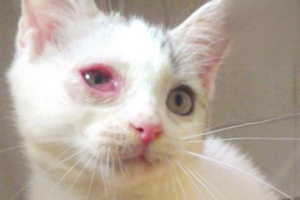
Why One of Your Cat’s Eyes Is Suddenly Red and Swollen
A cat with one red, swollen eye is usually reacting to conjunctivitis, a localized bacterial infection, or — less commonly — an internal viral illness such as panleukopenia. Matching the right treatment to the cause matters, because randomly applying eye drops can make the problem worse. Watch for other symptoms such as digestive upset, and see a vet if the eye does not improve.

Early Signs of Cat Rhinotracheitis (Feline Herpesvirus)
Cat rhinotracheitis, caused by feline herpesvirus-1, is a highly contagious respiratory infection that spreads quickly between cats. Early signs look a lot like a cold — watery eyes, sneezing, nasal discharge, low energy, and poor appetite — but left untreated it can turn serious and even fatal. Isolating a sick cat and seeing a vet promptly are the most important first steps.

Why Your Dog Has Red Eyes with Crusty Discharge
Red eyes with crusty discharge can be as simple as a dietary imbalance or a stray speck of dust, or as serious as infection, entropion, keratitis, or a corneal ulcer. Matching the sign to the cause—and seeing a vet for the painful ones—protects your dog's sight.

How to Treat Folliculitis in Dogs
Folliculitis shows up as red, swollen skin with tiny black specks at the hair roots that come off easily when wiped. Mild cases respond to gentle cleaning and an antibiotic ointment; severe ones need a vet visit or medicated bath. Keeping the coat dry and clean is the best prevention.

Why Your Dog Has Red Spots on Its Belly
Red spots on a dog's belly usually come from a bacterial or mite (mange) infection, or from a skin condition made worse by heat and moisture. Pinpointing the cause lets you treat it correctly—antibiotics for bacteria, mange therapy for mites, and a vet visit when it spreads.

Why Your Dog Is Sneezing and Blowing Blood from the Nose
Blood from a dog's nose is not the same as a human nosebleed from heat—it can signal trauma, a clotting problem, nasal mites, or a lodged object. Because severe bleeding can turn critical fast, any nosebleed with sneezing deserves a prompt veterinary exam.

Can a Dog’s Cold Spread to People?
A dog's cold cannot pass to humans—canine and human cells and viruses are too different for cross-infection, so there is no need to mask up around a sneezing dog. What matters is treating the dog and remembering that a few other pet illnesses can pass between species.