Search Results
3212 results for “Temperature”
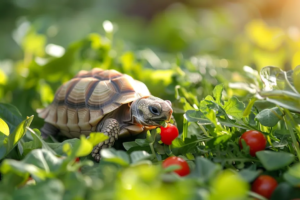
Feeding Precautions to Prevent Enteritis in Turtles
Turtle enteritis has primary causes (poor husbandry) and secondary causes (parasites, liver disease, systemic infection); the primary causes are the easiest to control. The key feeding measures are: avoid hard-to-digest or spoiled food, stop feeding in low or sharply fluctuating temperatures, wait before feeding a newly arrived turtle, and pause feeding during illness—plus feed on a fixed schedule and in measured amounts.
What Should I Do If My Cat Eats Rat Poison?
After eating rat poison, a cat may develop a fever, lethargy, loss of appetite, and vomiting, or show internal and external bleeding such as nosebleeds, bloody vomit, bloody stool, or black tarry feces. Because the toxin can severely damage the liver and other organs, seek veterinary care immediately—if none is nearby, induce vomiting at home with hydrogen peroxide, then follow up with IV fluids and bloodwork.

What Are the Differences Between Aquatic, Semi-Aquatic, and Terrestrial Turtles?
Aquatic and terrestrial turtles are similar in temperament and basic care, but they differ greatly in the temperature and humidity their habitat requires. This guide breaks down the key distinctions between aquatic, semi-aquatic, and terrestrial turtles to help you choose the right pet turtle.

Oriental Shorthair
The Oriental Shorthair is a distinct breed, unexpectedly produced by breeders while developing another cat. They wanted a pure-white Siamese, so crossed Siamese with pure-white cats, producing today's Oriental. Though born in 1962, it was recognized as a new breed in 1972. Its appearance is close to the Siamese but differs greatly in coat color.

Canadian Hairless
The Canadian Hairless, also called the Sphynx, is an extremely rare hairless genetic variant that appeared during the breeding of American or European domestic cats. Although it shares the skin pigment of domestic cats, its skin bears only a few hairs. With a wedge-shaped body, large ears, and a bulky frame, its head looks like Yoda's. The whole look makes it seem not cute but rather frightening compared with domestic cats.

Korat
The Korat cat, also called the Korat or Si-Sawat, originates from the Khorat Plateau in northwest Thailand and is an ancient breed. Introduced to the US in 1959 and recognized by American cat lovers in 1965, and by Britain 10 years later. Its coat, like the Russian Blue and Chartreux, is solid blue with no shading or pattern, with a silvery sheen, and it has a unique heart-shaped face.
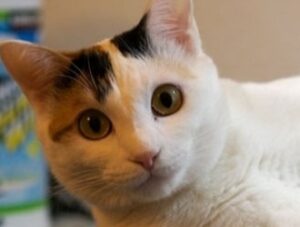
Japanese Bobtail
The Japanese Bobtail, also known as the Lucky Cat (Maneki-neko), is very popular in Japan. Cat lovers, upon hearing 'lucky,' want one. It is a native Japanese breed with a history tracing back centuries. Bred in the US after introduction, it is said an American cat lover in Japan found a cat with a short rabbit-like tail and brought several back after WWII; these are the ancestors. The Japanese Bobtail sits with one front paw raised, said to represent good fortune.

Tonkinese
The Tonkinese, also known as the Vietnamese cat, is not from Vietnam but a purebred short-haired breed produced by crossing the Siamese with the Burmese, first appearing in North America in the 1930s. With pointed coloring softer than the Siamese and a short, silky coat like the Burmese, the Tonkinese is famously affectionate, active, and people-oriented.

Persian
The Persian cat, also called Persian, Chinchilla, or Himalayan, with the Latin name Persian, represents nobility in people's minds. In China, most people's first pet cat was a Persian. However, most kept Persians are not purebred but non-purebred bred by merchants to meet the market; purebred Persians cost over a thousand dollars. Originating in Persia (Iran), it was developed in Britain over more than 100 years from Afghan longhair and Angora cats.

Egyptian Mau
The Egyptian Mau (Felinae) is found worldwide. Although called the Egyptian Mau, it cannot be confirmed that it originated in Egypt; however, because its image and written records appear in ancient Egyptian murals, steles, and papyrus scrolls, people believe its ancestor is the African wildcat. In the 1950s, the Egyptian Mau was introduced to the United States and Britain, and in 1968 it won awards in formal competitions.