Search Results
579 results for “Summer Care”
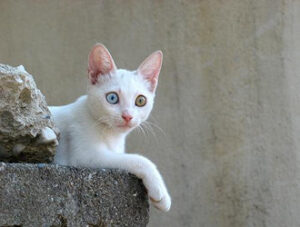
TurkishVan
Turkish Van (details)

Siberian
The Siberian Forest Cat, shortened to Siberian Cat, has the earliest written records from the 11th century: it was a very common cat in Russian markets and Siberian villages. Living in a harsh country, it is covered in long fur with a thick ruff around the neck. Its outer guard hairs are hard, smooth, and oily, and its dense undercoat resists the Siberian cold.
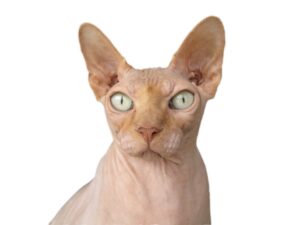
Sphynx
Sphynx (details)

Cornish Rex
The Cornish Rex, English name Cornish Rex, originates from England. Its ancestor is a non-purebred shorthair, dating to 1950, with a childlike, mischievous personality. The breeder mated the first kitten, Kallibunker, with its mother, producing more cats. This is the origin of the Cornish Rex breed.

Canadian Hairless
The Canadian Hairless, also called the Sphynx, is an extremely rare hairless genetic variant that appeared during the breeding of American or European domestic cats. Although it shares the skin pigment of domestic cats, its skin bears only a few hairs. With a wedge-shaped body, large ears, and a bulky frame, its head looks like Yoda's. The whole look makes it seem not cute but rather frightening compared with domestic cats.

Korat
The Korat cat, also called the Korat or Si-Sawat, originates from the Khorat Plateau in northwest Thailand and is an ancient breed. Introduced to the US in 1959 and recognized by American cat lovers in 1965, and by Britain 10 years later. Its coat, like the Russian Blue and Chartreux, is solid blue with no shading or pattern, with a silvery sheen, and it has a unique heart-shaped face.

Havana
Havana (details)

Nebelung
The Nebelung is essentially a long-haired Russian Blue, a rare variant recognized by TICA in 1987 and hailed as the 'nobility of long-haired breeds.' Apart from its coat, it is identical to the Russian Blue. Quiet, shy, and gentle, yet intelligent and adaptable, it is well suited to calm households.

Persian
The Persian cat, also called Persian, Chinchilla, or Himalayan, with the Latin name Persian, represents nobility in people's minds. In China, most people's first pet cat was a Persian. However, most kept Persians are not purebred but non-purebred bred by merchants to meet the market; purebred Persians cost over a thousand dollars. Originating in Persia (Iran), it was developed in Britain over more than 100 years from Afghan longhair and Angora cats.

Ragdoll
Ragdoll (details)