Search Results
183 results for “Male trait”

Ocicat
The Ocicat, despite being mistaken for a wild cat, is a wholly domestic breed developed in the United States from Abyssinian, Siamese, and American Shorthair ancestors. After a winding path to recognition, a decade of bloodline management won it acceptance. With its spotted, wild-looking coat and friendly, active nature, the Ocicat is a striking yet affectionate companion.

Egyptian Mau
The Egyptian Mau (Felinae) is found worldwide. Although called the Egyptian Mau, it cannot be confirmed that it originated in Egypt; however, because its image and written records appear in ancient Egyptian murals, steles, and papyrus scrolls, people believe its ancestor is the African wildcat. In the 1950s, the Egyptian Mau was introduced to the United States and Britain, and in 1968 it won awards in formal competitions.

Tabby Cat
The Tabby Cat originated in the United States. It has a copper-brown base coat with pure black tabby pattern markings and a lighter copper-colored ring surrounding them. The neck is relatively short and muscular. The coat is short, thick, and stiff in texture. The personality is independent, lively, and alert. With strong rat-catching ability, it is beloved by ordinary people. It features a classic tabby pattern and red tortoiseshell markings of varying shades, both clearly visible. The paw pads are red or black. The breed trait is that tortoiseshell tabby cats, or 'tortie tabbies,' are very likely to be female only. It is a natural tabby breed formed through thousands of years of natural selection.

American Shorthair
Among cat breeds, the American Shorthair is hugely popular with cat lovers. Its honest, good-natured looks are enough to make us want to bring one home. Below we discuss the American Shorthair breed, along with its price and how to buy one.
What color is the blood parrot fish?
The blood parrot fish is generally pink or blood-red. Also called Red God of Wealth, Wealth fish, and blood parrot, adults are brightly blood-red and plump with a gentle nature, fast growth, strong disease resistance, and good temperature tolerance, making it a popular ornamental fish. A special trait: male blood parrots are sterile, and females can only hybridize with other fish.

Grey-headed Lovebird
The Grey-headed Lovebird (Agapornis canus) is loved for its largely green plumage, its lifelong pair bonds, and its quiet nature compared with many other parrots. Native to Madagascar, it is a small, gentle, and shy companion bird.

Salmon-crested Cockatoo
As its name suggests, the wild Salmon-crested Cockatoo is found only in Indonesia's Maluku Islands; elsewhere you will only see captive birds. Due to increasing hunting and habitat destruction, its numbers have dropped sharply, and it is now listed as a Vulnerable species.

Desert Cottontail
The Desert Cottontail is a typical wild rabbit distributed across North America. Hardy and numerous, it eats various vegetation and can survive in harsh environments. It digs burrows and usually likes to live in them.

Chameleon
Even if you have never kept a chameleon, you have surely heard that it can change color. Chameleons change color mainly for self-defense, but what physiological traits cause this? And did you know a chameleon's color can also reflect its mood?
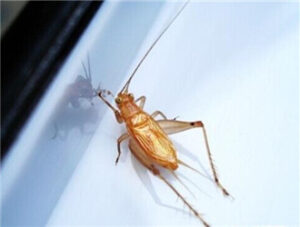
Yellow Cricket
The Yellow Cricket, as its name suggests, has a yellow body. Its song is very pleasant, so it has long been a favorite. It is small, only about 8 mm long as an adult.