Search Results
3405 results for “Heat”

Travancore Tortoise
The Travancore Tortoise (Indotestudo travancorica) closely resembles the Burmese Star Tortoise in appearance and shares its preference for a dry habitat. Though sometimes considered a subspecies of the Burmese tortoise, this has never been confirmed; it is a shy, inactive tortoise suited to simple husbandry.

Stripe-necked Leaf Turtle
The Stripe-necked Leaf Turtle (Cyclemys tcheponensis) has a broad distribution and healthy wild populations, and even wild-caught individuals adapt well to human care. A semi-aquatic species, it favors shallow water adjoining land; adults prefer fruit while juveniles lean toward meat.
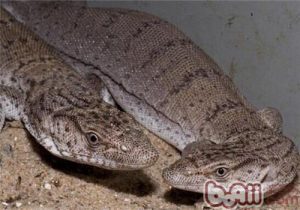
Pigmy Mulga Monitor
The pygmy mulga monitor is mainly distributed across the dry regions of western, northern, and southern Australia and Queensland. It will even eat smaller lizards of its own kind and forages on the ground or in trees.

White-throated monitor
The white-throated monitor (Varanus albigularis) is a fairly typical monitor lizard and possesses most of the traits of the group.

Mud and Musk Turtles (Egg Turtles)
The 'egg turtle' is not a single species but the common nickname for the family Kinosternidae — mud turtles and musk turtles — named for their smooth, egg-shaped carapace. Mostly North American, they are popular, interactive pets, but each species differs in size, care difficulty and husbandry, so research the exact species before buying.

Golden Python
The Golden Python is a patternless, leucistic morph of the Burmese python (Python bivittatus), prized for its uniform golden-cream coloration. Wild-type individuals cannot survive in nature due to a lack of protective melanin, so every specimen in captivity is captive-bred. A large, heat-loving constrictor, it needs steady temperatures of 26–33°C, regular soaking to aid shedding, and a diet of whole rodents or rabbits.

Banded Krait
A strikingly banded, highly venomous elapid of southern China and Southeast Asia - beautiful but dangerous; not a pet and a poor choice for novices.

Mammary Tumors in Dogs and Cats
Mammary tumors are common in intact female dogs and are the third most common feline tumor. They often appear as firm nodules in the mammary chain and can ulcerate or spread to lymph nodes and lungs. Early spaying sharply lowers risk, and surgery is the main treatment.

Uterine Tumors in Dogs and Cats
Uterine tumors are uncommon in dogs and cats, with leiomyomas being the most frequently seen type. They often produce no obvious signs and are found incidentally during abdominal palpation or ultrasound, though bleeding from the vulva can occur. Surgical removal of the uterus and ovaries is the treatment of choice.

Canine and Feline Eczema (Moist Dermatitis): Symptoms, Treatment, and Prevention
Eczema is a superficial skin inflammation in dogs and cats driven by allergy and weak skin defense, producing redness, vesicles, hair loss, and crusting. It is managed by relieving itch, calming inflammation, and keeping the environment clean.