Search Results
3409 results for “Heat”

Yellow-browed Warbler
The Yellow-browed Warbler (Yellow-browed Warbler) is a very active little bird, smaller than a sparrow, with its type locality in India. It is listed in the 'National Protected Terrestrial Wildlife of Beneficial or Important Economic and Scientific Value' directory issued by the State Forestry Administration on August 1, 2000.
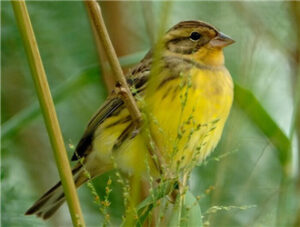
Emberiza aureola
The Yellow-breasted Bunting (Emberiza aureola), also known as the Rice bird, has two subspecies. Due to various causes the species is now endangered and could go extinct within ten years. The state has listed it in the national directory of beneficial or economically and scientifically valuable terrestrial wildlife under protection. It is mainly distributed from northern Europe to Siberia, northern Japan, and China, wintering in India and other regions.
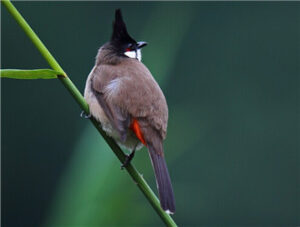
Red-whiskered Bulbul
The Red-whiskered Bulbul (Pycnonotus jocosus) has a wide distribution, mainly in southeastern Tibet, southern Yunnan, southern Guizhou, southwestern Guangxi, and Guangdong in China, as well as India, Nepal, Sikkim, Bhutan, Bangladesh, and Indochina. Each March, Yala Province in southern Thailand holds an annual Red-whiskered Bulbul singing contest, rewarding the winning owner.

Signs a Cockatiel Is Frightened and How to Care for One
Cockatiels are timid and startle easily, reacting with whole-body trembling, restlessness, and cage-bashing. Keep them in a quiet spot, maintain steady temperatures, and feed a mix of corn, sunflower seeds, millet, and cuttlebone for calcium. Comfort and gently stroke the head to calm a frightened bird.

Siberian Chipmunk
The Siberian Chipmunk has the habits of storing food and hibernating; hibernation occurs in the wild, while in warm indoor captivity it does not need to hibernate. Wild chipmunks are mainly distributed in North China, Northwest China, and Northeast China. Their fur is of good quality and attractive.

Chinchilla laniger
The Chinchilla laniger (Chinchilla laniger) is native to the Andes Mountains of South America, where it lives in caves and rock crevices at about 1,600 m elevation. Its appearance resembles that of a rabbit and a squirrel. A special feature is its pair of large, bright, ruby-red eyes, which are beautiful.

Golden Conure / Queen of Bavaria’s Conure
The Golden Conure has very special plumage: except for green wings, its entire body is golden yellow, dazzling and beautiful. It is one of the rarest, most beautiful, and largest of the conures.

Jardine Parrot
The Jardine Parrot (Poicephalus gulielmi) currently has three subspecies. Its body is almost entirely green and is the second-largest parrot species after the Cape Parrot. Its distribution is scattered and not concentrated, mainly across central Africa and parts of West Africa.

Rhesus Macaque
The Rhesus Macaque (Macaca mulatta), also called the yellow monkey, rhesus monkey, or Guangxi monkey, is a primate physiologically very close to humans and easy to domesticate and breed. However, because many monkeys are now protected species, keeping a rhesus macaque as a pet has become a major challenge.

Slow Loris
The Slow Loris (Loris tardigradus) is a small prosimian of the family Lorisidae and genus Loris. It is nocturnal, moves slowly, and prefers to rest atop tree branches. In recent years, due to habitat destruction, hunting for use in traditional medicine, overhunting, and its own biological traits, it is on the brink of extinction.