Search Results
495 results for “Daily Care, Cat Health”

Emydoidea blandingii (Blanding’s Turtle)
Blanding's turtle is a semi-aquatic turtle of the Great Lakes region, gentle and cold-hardy, with a smooth black helmet-shaped shell and a yellow hinged plastron marked with black blotches. It is omnivorous and adapts well to captivity.

Pseudemys alabamensis (Alabama Red-bellied Turtle)
The Alabama red-bellied turtle is a small to medium aquatic turtle with a carapace 35–45 cm long. Hatchlings are vividly colored, but in the wild adults become dull and grayish-black; captive-bred individuals can retain their bright coloration.

Coahuilan Box Turtle
The Coahuilan Box Turtle (Terrapene coahuila) is an uncommon box turtle that adapts poorly to captivity compared with its eastern relatives. Its plain, unpatterned shell makes it less popular among keepers.

Zhou’s Box Turtle
Zhou's Box Turtle (Cuora zhoui) is a rare and precious turtle in China, found only in Guangxi and Yunnan provinces. Wild populations are nearly depleted, and most knowledge about the species comes from captive husbandry experience.
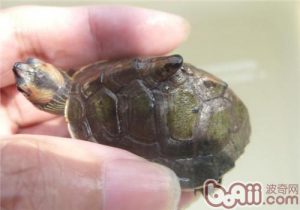
Indian Roofed Turtle
The Indian Roofed Turtle (Kachuga tecta) is one of the more common roofed turtles, recognizable by the distinctive raised black keel on its shell. Native to the rivers of the Indian subcontinent, it is a timid aquatic turtle that can enter hibernation.

Western Hermann’s Tortoise
The Western Hermann's Tortoise (Testudo hermanni) is a common, beginner-friendly tortoise with undemanding environmental needs and good disease resistance, though it carries a relatively high price. Native to Spain and southern France, it is a Mediterranean-species herbivore that also occasionally takes animal prey.

Hilaire’s Toadhead Turtle
Hilaire's Toadhead Turtle (Phrynops hilarii) is a side-necked turtle in the toadhead genus, strongly affected by ambient temperature and closely tied to it in behavior. Delicate and hard to keep in captivity, it is not recommended as a first turtle.

Travancore Tortoise
The Travancore Tortoise (Indotestudo travancorica) closely resembles the Burmese Star Tortoise in appearance and shares its preference for a dry habitat. Though sometimes considered a subspecies of the Burmese tortoise, this has never been confirmed; it is a shy, inactive tortoise suited to simple husbandry.

Acanthoscurria juruenicola
The Brazilian orange-banded tarantula (Acanthoscurria juruenicola) is native to Brazil and Peru — another large species from Brazil. Overall brown with orange markings at the joints, a deep black carapace, and red hairs on the abdomen, the color combination is striking. Like the Brazilian whiteknee, the spiderlings are almost grey-white and will dig to hide.

Exotic Shorthair
The Exotic Shorthair — everyone's "Garfield cat" — pairs the Persian's plush look with a short, easy-care coat. Sweet, calm, and affectionate, it's one of the most laid-back cat breeds to live with.