Search Results
54 results for “Chinese pond turtle”
How can you tell the sex of a Chinese pond turtle?
Sex is judged from the tail, the plastron and overall coloration. Males have thicker, longer tails set farther from the body and a slightly concave belly; females are shorter-tailed with a flatter belly.
Is the Chinese pond turtle a deep-water or shallow-water turtle?
The Chinese pond turtle is a shallow-water turtle, also called the longevity turtle and symbolic of good fortune and a long life. Keep it in shallow, clean water with rocks to climb on and bask, and feed it mainly meaty foods - dried fish, fish, shrimp - or simply turtle pellets; it's omnivorous but leans carnivorous.
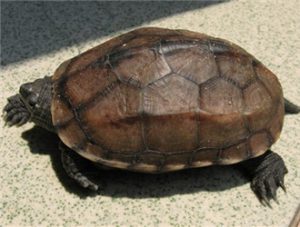
Chinese Pond Turtle (Reeves’ Turtle)
China's most common native turtle - hardy, cheap, and the 'ink turtle' that turns black with age. A classic, beginner-friendly pond turtle.
Can a Brazilian (red-eared slider) turtle recognize its owner?
Yes - red-eared sliders are relatively smart among turtles. If fed consistently for over a week, they learn to recognize the owner and grow calmer and tamer.
Which Turtles Are Cheap and Easy to Keep?
Popular pet turtles that are both affordable and easy include the Chinese pond turtle, red-eared slider, painted turtle, Burmese tortoise, yellow-spotted side-neck, Mississippi map turtle, flame turtle, mud turtle, and musk turtle. They resist disease and suit beginners. The Chinese pond turtle is native, interactive, and trainable; the red-eared slider is cheap, easy, and long-lived beyond twenty years; the yellow-spotted side-neck is colorful but needs a heater above 30 degrees as a tropical species.
Which Turtles Are the Most Interactive?
Many turtles are surprisingly interactive, including the Mexican mud turtle, Florida snapping turtle, West African side-neck, yellow-spotted side-neck, western painted turtle, map turtle, musk turtle, helmet mud turtle, Chinese pond turtle, and red-eared slider. The Chinese pond turtle is a native species that adapts well and rarely gets sick. No matter the breed, good interaction depends on learning the turtle's habits, feeding appropriately, and giving consistent, scientific care so the turtle stays healthy.
Which Turtles Prefer Shallow Water?
Common shallow-water turtles include the golden coin turtle, yellow-margined box turtle, yellow-breasted turtle, Amboina box turtle, golden-headed box turtle, Asian giant turtle, spiny hill turtle, red-eared slider, and Chinese pond turtle. These are semi-aquatic species that cannot live in deep water and must not stay away from it too long. They inhabit wetlands, ponds, streams, and lakes close to water. In captivity, keep the water level at about 1.5 times the turtle's height to prevent drowning, and provide a basking platform for resting and sunning.
Which Turtles Are Best for Beginners?
Good starter turtles include the Chinese pond turtle, red-eared slider, musk mud turtle, hybrid flower-pond turtle, and common snapping turtle. These species are inexpensive, adaptable, and resilient, so beginners can practice with them. Many new keepers start with the Chinese pond turtle or red-eared slider. As long as basic mistakes are avoided and the turtles are cared for attentively, they can thrive. The most important management tasks are clean water, stable warm temperatures, and a proper basking area to reduce illness.
Which Pet Turtles Are Most Common?
The most common pet turtles include the Chinese pond turtle, red-eared slider, yellow-margined box turtle, red-faced mud turtle, painted turtle, musk turtle, map turtle, and yellow-breasted turtle. Among them, the Chinese pond turtle and yellow-breasted turtle are native Chinese species loved by keepers. Chinese pond and red-eared slider turtles are inexpensive and easy to raise, making them ideal for beginners. Because each species has different habits, owners should learn the specific needs of their turtle, such as basking requirements, and prepare a basking platform so the animal can dry off and absorb heat.
How Often Do Turtles Shed Their Shell?
Turtle shell shedding (ecdysis) is a normal part of growth: as the body enlarges, the old shell can no longer contain it, so a new one forms underneath. Turtles usually begin shedding around age 2 to 3, with each cycle lasting 1 to 3 months, most often in spring and summer when metabolism is high. After age 6, growth stabilizes and shedding slows. Owners must let the scutes detach naturally—never pull them—and boost calcium and nutrition during the process. This article explains the timing, care, and warning signs.