Search Results
273 results for “Cat Behavior”
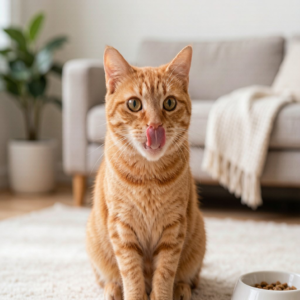
Why Does Your Cat Stick Out Its Tongue?
Cats stick out their tongues for many reasons, including cooling down, cleaning the mouth, relaxation, and illness, or simply as a normal habit. They pant lightly to release heat through tongue vessels, and their barbed tongues groom the body and clear food and bacteria from the mouth. Frequent or long-lasting tongue-out behavior, though, can signal a health problem worth checking.
How to Read Your Cat’s Mood From Its Ears
A cat's ears are a precise emotional radar: 32 independent muscles let them rotate 180 degrees to pin sound, and their position shifts with mood in real time. Forward and relaxed means content and trusting; upright and swiveling means alert and defensive, so don't disturb; flat back against the head (the "airplane ears") means fear or stress and a risk of fleeing or lashing out, so move the cat to a calm space and consider a pheromone spray. A single tilted ear shows curiosity, and frequent flicking just means something tickled the ear. Reading these cues helps you interact at the right moment and avoid forcing contact when the cat is uneasy.

Why Does Your Cat Love to Rub Against You?
Cats have scent glands on their cheeks and chin that release a marking substance. When a cat rubs on you, it leaves its scent to claim you as part of its territory, a way to express belonging and security. A cat may also rub when bored or hungry to ask for attention, play, or food. Respond with a gentle voice and soft strokes on the head, chin, or neck, and spend more time playing together.
Why Your Cat Starts to Look Like You (It’s More Than Mimicry)
Many owners hear that their cat is the spitting image of them, and science backs it up. A British photographer pairing 3,000 cats with their owners found they do grow more alike over time, though a cat's breed determines its looks, not its owner's face. The real similarity comes from behavioral sync, calm owners raise calm cats and anxious ones raise jumpy cats, cats mimic our body language and match our daily rhythms. Psychology's "similarity attraction" means we subconsciously pick cats that resemble us, and brain studies show shared oxytocin and cortisol levels between long-term companions. In short, your cat doesn't become you, it tunes to your frequency.

Why Does Your Cat Head-Butt You?
A cat head-butting you carries several meanings and is a way to express love and needs through body language. Cats head-butt each other to show friendliness, and with people they do the same to build a closer bond and display affection. A cat usually head-butts only those it likes, so respond with more attention and warmth to deepen your trust and closeness.
Can a Cat’s Personality Change?
A cat's personality can shift under certain conditions, influenced by negative experiences, health, age, and genetics. For example, a once sunny cat may become timid or depressed after abuse or the loss of a companion. To keep a cat's character stable and healthy, provide a steady environment, proper socialization, and plenty of affection.
Cat Won’t Drink in Summer? 8 Tips to Get It Drinking on Its Own
A healthy adult cat needs about 50-60 ml of water per kg of body weight each day, but dry kibble is only around 5-10% moisture, so summer drinking matters even more. Cats sweat only through their paw pads and ears and cool poorly, so low intake risks heat stress. Practical fixes: use a shallow ceramic or glass bowl (deep bowls annoy whiskers), offer a filtered running-water fountain, keep bowls over 1.5 m from the litter box and place several around the home, rehydrate freeze-dried food, serve wet food in the evening, and offer unsalted broth a few times a week. Senior, obese, and chronically ill cats need closer monitoring for dehydration.
Why Has Your Cat Suddenly Become Aggressive?
A cat can turn aggressive for many reasons, including physical health problems, social conflict, bad past experiences, lack of play and stimulation, and fear or stress. Owners should learn their cat's physical and emotional needs and provide affection, social contact, stimulation, and a safe environment to prevent negative moods. If the aggression persists or worsens, have the cat checked at a veterinary clinic and, when needed, consult a professional animal behaviorist.

Cat Kidney Disease: Causes, Diagnosis, and Care
Cat kidney disease comes in two forms: acute kidney injury and chronic kidney disease. Early chronic kidney disease is easy to miss, because signs like poor appetite and low energy are vague, and by the time obvious symptoms appear the condition is often advanced. Acute kidney problems show clearer signs and usually respond well to prompt treatment. Many risk factors, including infection, toxins, stones, and tumors, can gradually damage the kidneys, so a veterinarian must identify the underlying cause. With proper care and monitoring, a cat with kidney disease can still enjoy a good quality of life for years.

100 Essential Tips Every New Cat Owner Should Know
Bringing home a first kitten is exciting but daunting, and poor care can hurt both of you. These 100 essentials cover diet (life-stage food, toxic grapes/chocolate/onion/garlic, no bones or raw meat, fresh water), daily care (brushing, nail and ear cleaning, litter hygiene, n+1 boxes), health (vaccines at 8–12 weeks, deworming, normal temperature 38–39.2°C, spay/neuter, no human meds), behavior (slow blinks, tail talk, no punishment), and home safety (screens, hiding wires, toxic plants, no smoke). Read them once and you'll share a calmer, healthier life with your cat.