Search Results
5283 results for “Can f 5”
How to Treat Dog Keratitis
Dog keratitis shows as discharge and red conjunctiva and worsens without prompt care. It splits into acute, chronic, and purulent forms; treat with chloramphenicol or warm/cold compresses, flush acute cases with boric acid or rivanol, and address the root cause (distemper, chlamydia, allergy, chemical burn).

What Beginners Should Know About Keeping Rabbits
Don't start with too many rabbits; build experience first, then grow the herd. Here are the main points beginners should watch when keeping rabbits.

Common Causes and Fixes for Arowana Underbite (Dou Zui)
An arowana underbite (dou zui) is a lower jaw longer than the upper, like an underbite in humans, and hurts its looks. It is congenital (genetic, shows at 20-25 cm) or acquired from oversized food, a too-small tank, frights, or normal male mouthbrooding. Mild cases improve with a bigger tank, timed feeding, calm surroundings, and smaller varied food; severe cases are hard to reverse.
Key Management for Raising Baby Rabbits
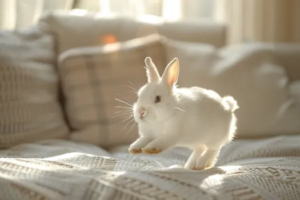
A baby rabbit is usually one from weaning to three months, the hardest age to keep and the time with the highest death rate. Here are the key management tasks to raise survival.

How Chinchillas Mate and Reproduce
Chinchillas can be paired from 8 months and 500 g; males mature at 4-6 months but females should not be bred early. After a brief evening mating a copulatory plug appears within 1-2 hours, and the pair must be separated to protect the 111-day pregnancy. Litters are 2-3 kits; watch for rejected kits when more are born than the two productive teats can feed.

Common Causes and Remedies for Arowana Drop-Eye
Drop-eye in arowana is the downward displacement of the eye caused by excess orbital fat, mainly from uneven lighting, overfeeding, sinking feeds, and a tank set too high. It is cosmetic rather than life-threatening, but can be corrected by switching to floating feeds, balancing the light, cutting fat, wrapping the tank, or surgery in severe cases.

First Aid for a Heatstroked Chinchilla
A chinchilla in heat and humidity can't shed heat and may collapse. Mild cases droop with hot ears; moderate ones stand unsteadily and can't eat; severe ones stiffen, arch the head, twitch, foam, and coma. Move the animal to a cool, ventilated place, cool the head/ears, and give a diluted cooling herbal liquid plus glucose or rehydration salts — severe cases also need B1 and B12. Prevention (cooling early) beats rescue.

All-Black Cat Breeds and Their Traits
Common all-black breeds include the Chinese rural cat, Bombay, Angora, British Shorthair, and Persian. Though many breeds come in black, a solid-color cat is fairly rare. Here are their traits.

How to Feed Chinchilla Treats Safely
A chinchilla's staple is hay and pellets; treats are for bonding only. Pick low-fat, low-sugar, natural plant snacks (dried carrot, papaya, apple, rose petals, raw oats) and avoid roasted seeds, candy, and anything with preservatives or color. Keep treats under 3 g a day, skip them when the chinchilla is sick, and never give fresh high-water fruit that causes diarrhea.

How Long Do Golden Coin Turtles Live — and How Big?
With good care a golden coin turtle lives 30–80 years (40–100 with hibernation); wild ones live longer. Adults reach about 1.5 kg, females larger than males. Feed earthworms, fish, shrimp, organ meat, or synthetic pellets plus occasional fruit, veg, and grain for vitamins, and don't breed them until females are 6–7 and males 4–5, when organs are ready.