Search Results
121 results for “Breeding, Reproduction”

Western Hermann’s Tortoise
The Western Hermann's Tortoise (Testudo hermanni) is a common, beginner-friendly tortoise with undemanding environmental needs and good disease resistance, though it carries a relatively high price. Native to Spain and southern France, it is a Mediterranean-species herbivore that also occasionally takes animal prey.

Painted Terrapin
The Painted Terrapin (Callagur borneoensis) is a distinctive member of the painted turtle genus whose carapace resembles a watermelon, with a red streak across the head. Distributed in Malaysia and Indonesia, it is a large, carnivorous, brackish-water turtle that must be kept in low-salinity water.
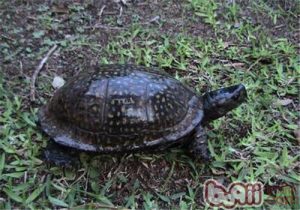
Gulf Coast Box Turtle
The Gulf Coast Box Turtle (Terrapene carolina major) is the largest subspecies of the Common Box Turtle, found along the U.S. Gulf Coast bordering Mexico. A typical omnivore reaching up to 18 cm in carapace length, it grows quickly and is relatively easy to keep.

Travancore Tortoise
The Travancore Tortoise (Indotestudo travancorica) closely resembles the Burmese Star Tortoise in appearance and shares its preference for a dry habitat. Though sometimes considered a subspecies of the Burmese tortoise, this has never been confirmed; it is a shy, inactive tortoise suited to simple husbandry.
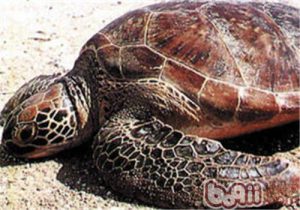
Loggerhead Sea Turtle
The loggerhead sea turtle (Caretta caretta) is a large marine turtle found in the warm temperate waters of the Atlantic, Pacific, and Indian Oceans. Historically overharvested for its meat and eggs, it is now listed as a protected species under international and Chinese law.

Stripe-necked Leaf Turtle
The Stripe-necked Leaf Turtle (Cyclemys tcheponensis) has a broad distribution and healthy wild populations, and even wild-caught individuals adapt well to human care. A semi-aquatic species, it favors shallow water adjoining land; adults prefer fruit while juveniles lean toward meat.

South African Bowsprit Tortoise
The South African Bowsprit Tortoise (Chersina angulata), also called the angulated tortoise, favors dry, hot regions and becomes inactive and refuses food when captive temperatures drop below 20°C. A strictly herbivorous species, it feeds only on plant matter in the wild and accepts fruits and vegetables in captivity.

Manganese Metabolism Disorders in Dogs and Cats
Manganese metabolism disorders in dogs and cats are usually deficiency, causing bone deformity, joint swelling, lameness, and reproductive disturbance, with rare toxicity causing reduced fertility and local albinism. They are corrected by balancing dietary manganese.

Leukemia in Dogs and Cats: Symptoms, Treatment, and Prevention
Leukemia is a malignant disease of the blood-forming system in which abnormal white cells flood the marrow and blood, damaging other organs. Forms include myeloid, lymphoid, monocytic, and mast-cell leukemia, and treatment is difficult, relying on chemotherapy and supportive care.

Feline Restrictive Cardiomyopathy: Symptoms, Treatment, and Prevention
Feline restrictive cardiomyopathy is a chronic heart-muscle disease in which the endocardium thickens and stiffens, preventing normal filling of the heart. Affected cats show breathing difficulty, weakness, and fluid buildup, and there is no cure—only symptomatic control.