Search Results
149 results for “Aquatic Species”
Why can’t you release a red-eared slider (Brazilian turtle) into the wild?
The Brazilian turtle is an invasive species with strong reproduction, listed among the world's most destructive. Released into nature, it disrupts the ecosystem, displaces native species, and can collapse the aquatic food chain. If you can no longer keep it, give it away; never release it.

Can You Release Unwanted Pet Goldfish Into the Wild?
Pet goldfish should not be released into the wild: they are captive-bred, poor survivors, can spread disease to wild fish, and may become invasive and upset local ecology — and releasing non-native species is banned under Chinese law. Rehome them with a friend, a pet shop, or an aquarium instead.
What kind of fish is ‘clear-water fish’?
Clear-water fish are fish living in clean mountain spring water, not a single species. Growing 3-4 years at about 4C on aquatic plants and microbes, they are mild, tender, and less fishy, tasting like seafood. Kaihua, Zhejiang is famous for farming them.
Which Turtles Prefer a Vegetarian Diet?
Most turtles are omnivorous and eat both plant and animal matter, but several species lean strongly toward plants. The Burmese peacock turtle is a rare, almost exclusively herbivorous species, while the impressed tortoise, yellow-spotted side-neck, yellow-headed temple turtle, and Asian giant turtle also prefer vegetation. Because a fully plant-based diet can cause nutritional gaps in side-necks and temple turtles, keepers should supplement with some animal or processed food to keep the diet balanced. Always wash fruits and vegetables before feeding and remove leftovers promptly so the turtle does not eat spoiled food.
Can Tortoises Swim?
Tortoises cannot truly swim. Their body structure is built for land, not water, yet they will not drown instantly if they fall in—their large lungs and broad shell create enough buoyancy to float for a while. That floating ability varies by species; the Aldabra giant tortoise, for example, moves faster in water than on land. But floating is not living: tortoises belong on land, and long soaks risk shell rot and drowning. Keepers should respect this by offering only a shallow soaking area with a ramp, never deep water. Even aquatic turtles can drown if kept too deep, especially as juveniles, so match the habitat to the species.

Red-Tailed Black Shark
The Red-Tailed Black Shark is a tropical fish species with a very distinctive appearance. Native to Thailand, this ornamental fish has a rather aggressive temperament, being relatively gentle toward other species but fighting fiercely with its own kind.
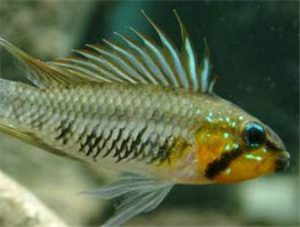
Black-banded Dwarf Cichlid
The Black-banded Dwarf Cichlid is mainly distributed at the confluence of the Rio Negro and the Amazon River in Brazil. It is a carnivorous ornamental fish with a gentle temperament and some territoriality, so care should be taken with tank mates, and plants should be added to the aquarium to give it a sense of security.
Red Cross Fish
The Red Cross Fish, also known as the Cross Fish or Red Cross Fish, gets its name from its red fins and the black cross pattern at the base of the caudal fin. This fish, native to Argentina, has a habit of attacking small fish, so it should not be kept with small species in a community tank.

Blackspot Barb
The Blackspot Barb is mainly distributed in southern Asia—India, Sri Lanka, and Myanmar—and is named for the large black spot on its caudal peduncle, its main distinguishing feature. It is omnivorous and easy to keep.
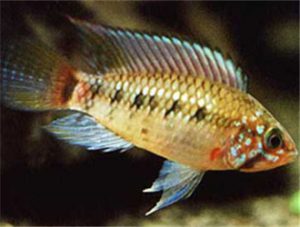
King Dwarf Cichlid
The King Dwarf Cichlid has a golden-yellow body, but unlike other dwarf cichlids it is not richly colored; still, its distinctive golden hue attracts many enthusiasts. It prefers soft water, so water quality requires attention in captivity.