Philippine Cobra
2 Photo Gallery
View All 8 Photos


1 Overview
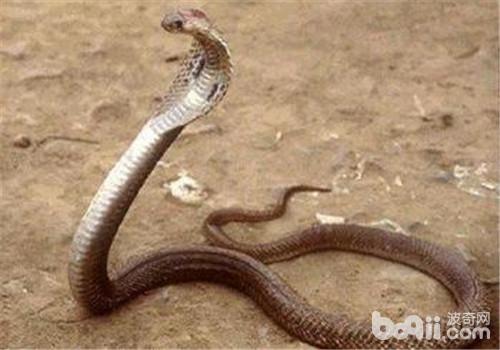
The Philippine cobra is mainly distributed in the Philippines and is a very famous venomous snake; its potent venom can kill a victim within an hour. Its venom is primarily neurotoxic.
Chinese Name: Philippine Cobra
Binomial: Naja philippinensis
Kingdom: Animalia
Phylum: Chordata
Class: Reptilia
Order: Squamata
Suborder: Serpentes
Family: Elapidae
Genus: Naja
Species: Naja philippinensis
Distribution: Mainly the Philippine islands of Luzon, Mindoro, Catanduanes, and Masbate.
2 Physical Characteristics
The Philippine cobra is best known for its deadly venom, which can kill within an hour; in the wild one must be able to recognize it to avoid being bitten.
Its proportions are relatively short and stout compared with other snakes, about 1.7 m long, though Mindoro individuals can reach 2 m. Coloration shifts from dark brown in youth to lighter brown at maturity, sometimes with a long black stripe on the throat and neck. There are about 20 scale rows near the neck, 21 at midbody, 182–193 ventral scales, and 36–49 subcaudal scales; the scale counts are sometimes uneven.
3 Natural Habitat
Because the Philippine cobra is so venomous—capable of killing within an hour—there are no records of captive keeping. We could only confirm its main distribution and preferred habitat.
It is mainly found in the Philippines—not only across the Luzon islands but also scattered through other archipelagos; records from the Calamian Islands and Palawan await further confirmation. Its habitats include farmland, areas near human settlements, and dense forest.
4 Diet & Nutrition
Famous for its lethal venom, the Philippine cobra has no captive-keeping records. What does it eat in the wild?
It preys mainly on frogs, rats, and other small mammals. Females lay 10–20 eggs per clutch, with an incubation period of 60–70 days. It is distributed mainly across the Philippines beyond the Luzon islands and scattered through other archipelagos; sighting records from the Calamian Islands and Palawan remain to be confirmed.