Halys Pit Viper
2 Photo Gallery

1 Overview
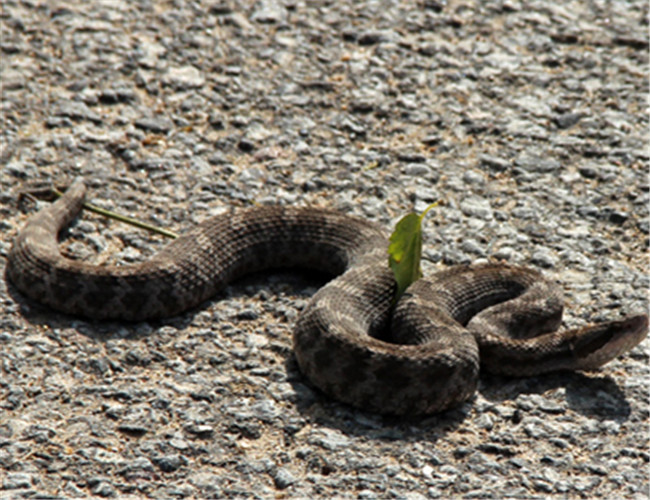
The halys pit viper (Gloydius halys), also the ‘earth duke snake’ or ‘grass flier’, is a small venomous pit viper distributed across China. Although venomous it has high medicinal value and is eaten, so it is farmed.
SOURCE NOTE: the source listed ‘Agkistrodon halys’; the modern binomial is Gloydius halys (palearctic pit viper). Venomous (pit viper); farmed in China for medicine. Representative related vipers include Deinagkistrodon acutus (hundred-pace) and Trimeresurus (bamboo viper).
2 Appearance
Colour variable; head to back grey-brown to earth-red; black tail tip. Body 60-70 cm, head slightly triangular, narrow neck, loreal pit, clear head-neck distinction. Back pale to red-brown with a dark ‘A’ mark on the head and two staggered rows of dark-brown round spots; outer dorsals and interventrals with irregular star-like dark points; belly grey-white with dense brown or black fine dots. Nasal scales wide-short in an upside-down T; preocular 2, postocular 2-3; dorsals 21(23)-21-17; ventrals 137-173; anal entire; subcaudals 29-54 pairs. Symmetrical large head scales, loreal pit, two dorsal rows of round spots.
3 Habitat & Environment
Also called ‘flowered snake’; a widely distributed small venomous snake. Cold-hardy, so not hard to farm. Likes plains, hills, low mountains or field streams with rocks, grass, ditches, graves, shrubs. Breeding, feeding, activity are temperature-driven: below 10 C barely feeds; below 5 C brumates; 20-25 C feeding peak; above 30 C retreats to hole, usually not feeding. Active at night; emerges in spring.
The most widespread, numerous venomous snake in China; its subspecies taxonomy was debated for 60+ years. Chinese researchers compared 560 specimens and Maki’s data: three subspecies – intermediary, short-tailed, and Japanese.
4 Diet & Feeding
Eats mainly rats, frogs, lizards, birds, insects. Avoid overly single-food diets (nutrient imbalance). High medicinal value, so some farm it commercially. Reproduction, feeding, activity are temperature-driven: below 10 C barely feeds; below 5 C brumates; 20-25 C feeding peak; above 30 C retreats, usually not feeding. Active at night; emerges in spring.