Natal Hinge-back Tortoise
2 Photo Gallery
View All 9 Photos


1 Overview
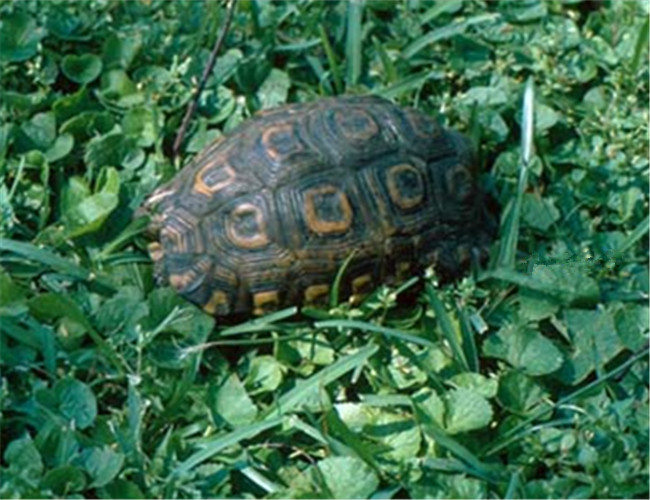
The Natal Hinge-back Tortoise is one of six hinge-back tortoises. It is relatively small, with obvious carapace patterns and a simple diet, being herbivorous. Found only in South Africa’s Natal province, it is scarce and rarely seen on the market.
Chinese name: Natal Hinge-back Tortoise
Chinese alias: Leopard Hinge-back Tortoise
English name: Natal Hinge-back Tortoise
Binomial name: Kinixys natalensis
Kingdom: Animalia
Phylum: Chordata
Class: Reptilia
Order: Testudines
Family: Testudinidae
Genus: Kinixys
Species: Natal Hinge-back Tortoise
Distribution: The Natal province of South Africa’s southeastern Cape.
Reproduction: Oviparous. Wild hinge-backs may mate year-round; clutch size is about 5 to 8 by size. Incubation about 30.5 degrees Celsius and 90 percent humidity, 130 to 160 days.
Habitat: Mostly semi-sandy, including open shrubland and coastal dune woodland.
Appearance: Maximum carapace 15.5 cm; wide serrated flared lower edge, supracaudal divided into 2, with 3 hooked upper jaws. Great color variation means no two share the same pattern.
Diet: Herbivorous, mainly leafy green vegetables.
2 Physical Characteristics
The carapace of the Natal Hinge-back Tortoise is not one solid piece but has a “joint” that helps it protect itself and avoid predators when in danger, a trait shared by all hinge-back tortoises, much like the movable plastron of the Chinese box turtle, except the hinge-back moves at the back.
I. Appearance features of the Natal Hinge-back Tortoise
The Natal Hinge-back Tortoise reaches a maximum carapace of 15.5 cm; the lower edge is wide and serrated and flares outward, the supracaudal is divided into 2, and it has 3 hooked upper jaws. Because colors vary greatly, no two individuals share the same carapace pattern. It is a smaller hinge-back; mature females are only about 15 to 18 cm.
II. Traits of the Natal Hinge-back Tortoise
Its defining feature is a ligament-like hinge between the 7th and 8th marginal scutes. This movable structure lets the turtle contract the ligament via muscle to close the shell when attacked, drawing the tail and hind limbs inside to avoid predators.
3 Care Guidelines
The Natal Hinge-back Tortoise lives in dry semi-desert with large day-night temperature swings, making survival hard. We know tortoises demand much of their environment, so why can this one adapt to such harsh conditions?
Its region is mostly designated by the South African government as wildlife reserves; habitat is mostly semi-sandy, including open shrubland and coastal dune woodland. The climate varies; in winter temperatures can drop below 10 degrees, while summer averages above 30, so in abnormal weather the tortoise instinctively hides in burrows to survive.
Its terrain is part of the Kalahari Basin, so in the wild it eats differently from the serrated hinge-back of rainforests, mainly weed shoots and leaves. In captivity avoid high-protein food. It is oviparous; wild hinge-backs may mate year-round, clutch size about 5 to 8 by size, incubation about 30.5 degrees Celsius and 90 percent humidity, 130 to 160 days.
4 Behavior & Habitat
Wild Natal Hinge-back Tortoises follow nature’s rhythm with a regular life. They know the cool nights and have adapted to constant drought; a tough creature, yet we must still provide a suitable environment.
As the name suggests, they are mainly distributed in South Africa’s southeastern Cape, the Natal province, a rather narrow range and a South African endemic. The habitat is typical dry semi-desert with little rain and large temperature swings. They are most active when it rains, but in extreme heat they dig into dried-up puddles to hide, losing as little water as possible, then wait for the next rain.
The Natal Hinge-back Tortoise lives in ranges of 27 to 30, 24 to 26, and 20 to 22 degrees Celsius. Wild individuals have a summer-rest habit, so do not keep it too hot, not above 35 degrees, and at night it can drop to 20, but keep at least 27 degrees around feeding for digestion. Relative humidity 60 to 85 percent; widely distributed with a clear rainy season, so they adapt to a broad humidity range.
5 Feeding Requirements
Natal Hinge-back Tortoise (details).
The Natal Hinge-back Tortoise is a typical herbivorous tortoise, but in captivity, to keep it healthy, provide a little animal food to ensure calcium absorption and use, while watching the amount.
I. Food selection for the Natal Hinge-back Tortoise
Main feed (>90%): dark leafy greens (e.g., flowering cabbage, kale, purslane, dandelion, plantain, alfalfa, wild mustard, pasture grass, chrysanthemum, lettuce, mulberry leaves and twigs).
Occasional (<10%): earthworms, slugs, river snails, grasshoppers, superworms, crickets. Cactus, aloe, fig, carrot, apple with skin, peach, various berries, kiwi, pumpkin, beans, peas, almonds, mushrooms, and balanced high-quality commercial tortoise food.
Avoid (0%): over-juicy fruits and vegetables, tomato, banana, lettuce, cabbage, cauliflower, broccoli, cabbage, cucumber, rhubarb, brussels sprouts.
II. Feeding key points for the Natal Hinge-back Tortoise
Feed high-fiber, high-calcium, low-phosphorus food with appropriate protein. High fiber keeps the digestive system healthy; high calcium prevents pyramiding; low phosphorus ensures calcium absorption; appropriate protein prevents overnutrition.