Montane Pit Viper
2 Photo Gallery
View All 8 Photos


1 Overview
The montane pit viper, also called the snow mountain pit viper or ma she, is found in Sichuan, Yunnan and Tibet of mainland China. It lives at elevations up to 4,321 m and is a small venomous snake.
Chinese Name: Montane Pit Viper
Scientific Name: Gloydius monticola
Kingdom: Animalia
Phylum: Chordata
Class: Reptilia
Order: Squamata
Suborder: Serpentes
Family: Viperidae
Subfamily: Crotalinae
Genus: Gloydius
Species: Gloydius monticola
Distribution: Sichuan, Yunnan, Tibet, Shaanxi, Gansu, Qinghai and other regions of China
2 Physical Characteristics
Also called the snow mountain pit viper or ma she, it is found in Sichuan, Yunnan and other parts of mainland China. As a small venomous snake, take care to identify it in the wild and avoid provoking it to prevent bites.
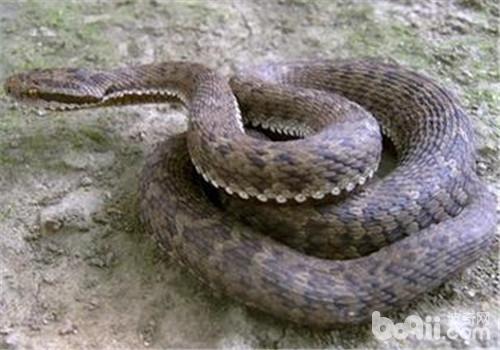
It is a small venomous snake; total length is about 47 cm in males and 52 cm in females. The dorsal surface is brown with irregular beige or gray-green blotches from neck to tail; the top of the head has dark longitudinal stripes with edges not bordered by pale color; the ventral surface is earthy red, densely speckled with black spots. The neck is distinct with a pair of loreal pits; the canthus is not pronounced; the internasal scales are roughly trapezoidal, not narrowing sharply at the sides. Midbody dorsal scale rows are mostly 21 (some 19, a few up to 23) and are keeled; ventrals number 149–178, the anal scale is single, and subcaudals are 29–48 pairs.
3 Behavior & Habitat
As its name suggests, the montane pit viper favors high mountain regions. Because it has medicinal value—dispelling wind and relieving pain, detoxifying and reducing swelling—it holds some economic worth. Where does it live in the wild?
It prefers alpine and plateau regions, often appearing among weeds and rocks at the edges of terraced fields, on hillsides, roadsides and near streams. It feeds on rodents, lizards and frogs. It is ovoviviparous; the breeding season is September–October, producing about 6–7 young per litter, each 11–12 cm at birth, possibly breeding every other year. Vertical distribution ranges from 1,500 m up to 4,320 m.
4 Feeding Requirements
Because of its medicinal value—dispelling wind and relieving pain, detoxifying and reducing swelling, tonifying deficiency and promoting lactation—it has some economic worth. However, there are no records of captive keeping, so what does it eat in the wild?
It mainly lives in alpine and plateau regions, appearing among weeds and rocks at terraced-field edges, hillsides, roadsides and streams. It eats rodents, lizards and frogs. It is ovoviviparous; the breeding season is September–October, about 6–7 young per litter, 11–12 cm at birth, possibly breeding every other year. Vertical distribution ranges from 1,500 m to 4,320 m.