East African Horned Baboon Tarantula
2 Photo Gallery
View All 8 Photos


1 Overview
The East African horned baboon tarantula is a relatively rare species in the domestic market, and it is very difficult to keep, with a fairly potent venom—an expert-level challenge. Without close observation, its appearance resembles that of the Togo starburst baboon.
Chinese Name: East African Horned Baboon Tarantula
Kingdom: Animalia
Phylum: Arthropoda
Subphylum: Chelicerata
2 Physical Characteristics
Because the East African horned baboon has a fairly strong venom and moves very fast, it is not suitable for beginners; it is recommended only for expert-level keepers. As it is rare in the domestic market, it is something of a collector’s species.
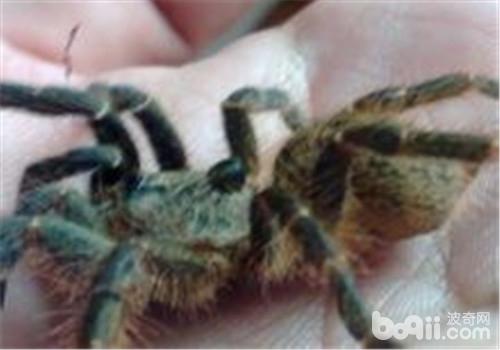
This tarantula is uncommon domestically; at a glance it resembles the Togo starburst baboon, but the patterning is fundamentally different. Compared with other tarantulas, its leg-to-body proportions are more disproportionate, giving it a look somewhat like the Singapore blue.
3 Husbandry & Enclosure
The East African horned baboon is a terrestrial species; it is recommended to use slightly moist peat, coconut fiber, or clay as substrate. Native to Mozambique and Zimbabwe, it prefers an environment of 27–30°C with about 75% humidity.
Due to its higher venom potency and speed, it is not for beginners. It very rarely kicks urticating hairs. Females have a body length of about 7 cm and males about 5 cm, with a leg span reaching 14–15 cm. Provide a fairly humid environment; this species requires good ventilation and is best given a relatively spacious enclosure.
4 Feeding
The adult East African horned baboon reaches a leg span of 14–15 cm and is terrestrial. Because of its potent venom and speed, it is not suitable for beginners.
It can be fed crickets, grasshoppers, locusts, and mealworms. As it is a rare species domestically, it is considered a collector’s tarantula. Provide a humid environment with good ventilation and, ideally, a spacious enclosure.